

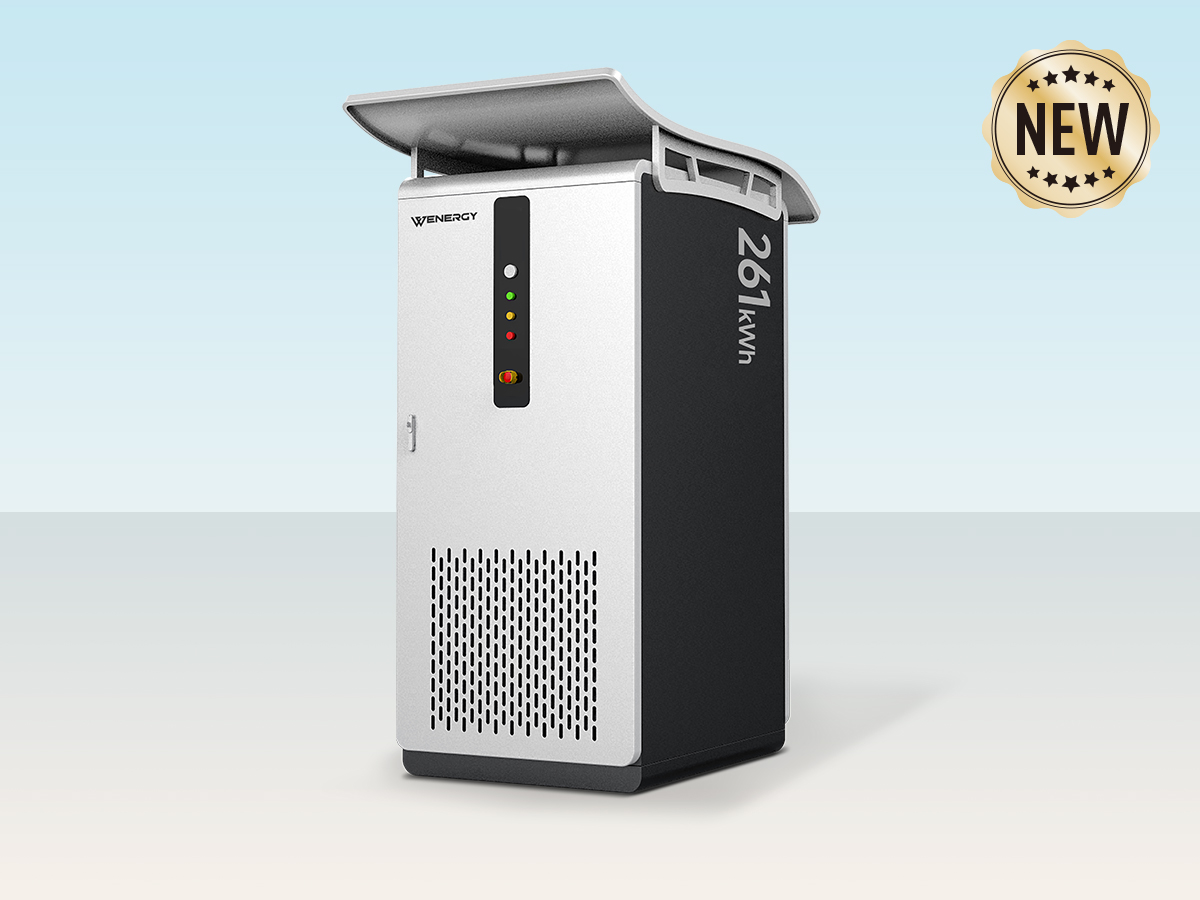
Compact energy storage is rapidly becoming a priority for commercial and industrial users who need reliable power without dedicating excessive space or infrastructure. As energy costs fluctuate and operational resilience becomes a strategic concern, smaller-capacity systems with advanced thermal management are gaining attention. From a third-party industry perspective, the 261kWh liquid-cooled BESS represents a practical balance between footprint, performance, and lifecycle value. This category of liquid cooling energy storage system is increasingly viewed as a building block for flexible, site-level energy strategies.
What Defines a 261kWh Liquid-Cooled BESS
A 261kWh liquid cooled battery energy storage system is typically configured as an outdoor cabinet designed to operate reliably across a wide range of environmental conditions. Unlike air-cooled alternatives, liquid cooling directly regulates cell temperature through a closed-loop system, ensuring consistent thermal balance across battery modules. This design minimizes hotspots, reduces uneven aging, and supports longer battery life.
From a system integration standpoint, the compact cabinet form factor allows deployment in space-constrained locations such as factory yards, commercial facilities, and distributed energy sites. Despite its modest size, the system delivers substantial usable power, making it suitable for peak shaving, backup power, and energy shifting. Industry observers often note that this “small size, big power” profile is what differentiates a modern liquid cooling energy storage system from earlier cabinet-based solutions.
Performance Stability Through Advanced Liquid Cooling
Thermal management is central to the value proposition of any liquid cooled battery energy storage system. By maintaining cells within an optimal temperature range, liquid cooling improves charge–discharge efficiency and stabilizes performance under varying loads. This is particularly important for outdoor installations exposed to seasonal temperature extremes.
Stable thermal conditions also translate into predictable system behavior. For operators, this means fewer performance fluctuations and reduced maintenance intervention over time. From a third-party evaluation perspective, liquid cooling energy storage system designs are often favored in commercial and industrial applications because they align operational reliability with lower total cost of ownership. Consistent cooling supports higher cycling capability, enabling the system to deliver value across multiple daily use cases without accelerating degradation.
Functional Flexibility and Upgrade Path
Beyond thermal performance, the 261kWh liquid cooled battery energy storage system is increasingly valued for its functional flexibility. Many platforms offer upgrade options that expand application scenarios, such as maximum power point tracking (MPPT) for renewable integration, static transfer switch (STS) functionality for seamless power transition, and compatibility with EV charging infrastructure.
This modular upgrade approach allows asset owners to start with a core system and adapt as operational needs evolve. Optional features, such as a protective top cover, further enhance durability in challenging outdoor environments. From a market standpoint, such adaptability reinforces the role of the liquid cooling energy storage system as a future-ready asset rather than a fixed, single-purpose installation.
Market Outlook and Strategic Positioning
As distributed energy resources continue to expand, demand is growing for compact systems that combine efficiency, durability, and intelligent design. The 261kWh liquid cooled battery energy storage system fits neatly into this trend, offering commercial and industrial users a scalable entry point into advanced energy management without the complexity of large containerized solutions.
Within this landscape, Wenergy has drawn attention for its approach to liquid cooling energy storage system development. By focusing on high-efficiency liquid cooling, outdoor-ready cabinet design, and optional functional upgrades, Wenergy demonstrates how a well-engineered 261kWh platform can deliver stable performance and long-term value. For stakeholders assessing next-generation energy storage options, such design philosophy reflects where the market is heading—toward smarter, more resilient, and space-efficient solutions.
