

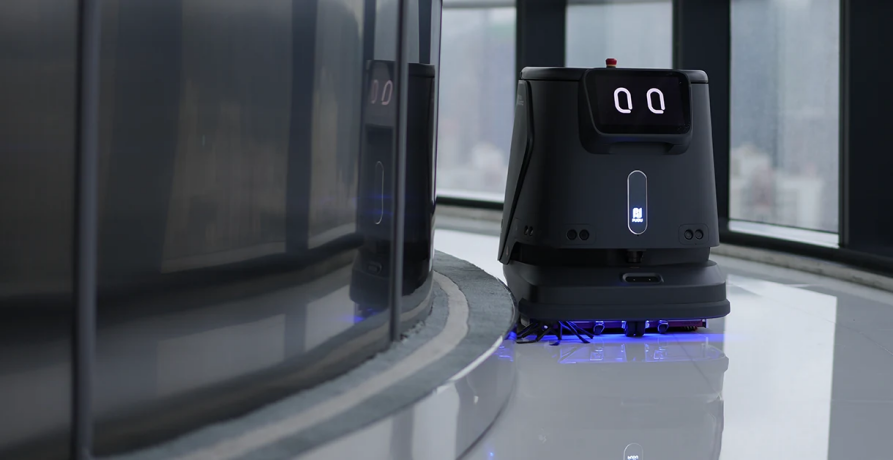
A practical procurement guide for facility, operations, EHS, IT, and purchasing teams comparing autonomous floor scrubbers, sweepers, vacuums, and mixed-use commercial cleaning robots.
May 12, 2026 | 15 min read
The hardest part of evaluating commercial cleaning robot brands is not watching a robot cross a clean demo floor. The hard part begins when procurement has to compare vendors that use different autonomy claims, different service models, different reporting dashboards, different safety language, and different assumptions about who maintains the machine after week three.
Quick answer: evaluate commercial cleaning robot brands by turning your facility into a scorecard. Define the cleaning workflow first, then score each vendor on facility fit, cleaning performance, autonomy and safety, maintenance and docking, software and cybersecurity, deployment support, commercial terms, and proof from similar sites. A brand should win because it can support your operating routine, not because it gives the smoothest showroom demo.
A strong RFP has two layers: pass/fail gates for critical requirements such as safety documentation, service coverage, data handling, and facility fit; then weighted scoring for the vendors that pass those gates.
Why The RFP Should Start With Operations, Not Brands
Commercial cleaning robotics has become a serious facility-management category. Interclean Amsterdam 2026 placed automation, autonomous robotics, data, health, hygiene, and sustainability at the center of the professional cleaning conversation, including a Robot Experience zone for live demonstrations. That does not mean every buyer should buy the most visible robot. It means the RFP needs to be mature enough to compare machines as part of a cleaning system.
A cleaning robot sits inside a management process. ISSA’s Cleaning Industry Management Standard frames cleaning around operational excellence, hygienic environments, and consistent management practices. That is a useful reminder for robot buyers: the machine is only one piece of the program. Routes, staff handoffs, consumables, training, inspection, documentation, and service response decide whether the robot becomes routine.
Safety and connected-product governance also belong in the RFP. IEC 63327:2021 covers automatic floor treatment machines for commercial indoor use, including sweeping, scrubbing, pickup, polishing, and related applications. OSHA’s NRTL list includes CSA/ANSI C22.2 No. 336 for rechargeable battery-operated commercial robotic floor treatment machines with traction drives. For cloud-connected robots, NIST CSF 2.0 is also relevant because it emphasizes governance and supply-chain risk management. EU buyers should also watch the Cyber Resilience Act, whose reporting obligations begin on September 11, 2026 and whose main obligations apply from December 11, 2027.
Step 1: Define The Cleaning Work Before You Invite Vendors
The first RFP mistake is treating every commercial cleaning robot as the same category. A scrubber-dryer, sweeper, vacuum robot, multi-function cleaner, and smart upright scrubber solve different problems. Before asking vendors for proposals, map the zones, surfaces, traffic patterns, debris, water access, noise limits, cleaning windows, and staff handoffs.
| RFP input | What the buyer should document | Why it changes brand evaluation |
| Cleaning job | Scrubbing, sweeping, vacuuming, dust mopping, spot cleaning, detail cleaning, or mixed workflow | A brand strong in large scrubbers may not be the best fit for dry debris, carpet, or compact public areas. |
| Floor type and condition | Sealed concrete, tile, vinyl, carpet, epoxy, slopes, expansion joints, wet areas, high-gloss floors | Cleaning quality, drying, traction, and brush or squeegee choices depend on the surface. |
| Traffic and obstacles | People, carts, pallet jacks, forklifts, strollers, displays, temporary staging, doors, elevators | Navigation claims need to be tested against real movement, not empty corridors. |
| Utilities and dock plan | Charging location, water refill, drainage, waste emptying, cleaning-chemical storage, Wi-Fi or 4G coverage | Docking and maintenance design often decide daily adoption. |
| Operating model | In-house cleaning team, BSC/contract cleaner, multi-site facility, night cleaning, daytime cleaning | The same machine may need different reporting, training, ownership, and service terms. |
| Proof requirement | Similar facility references, route data, safety documents, uptime/service reports, cybersecurity documents | Procurement needs evidence that matches its risk level. |
Table 1 – Commercial cleaning robot RFPs should begin with site evidence, not vendor claims.
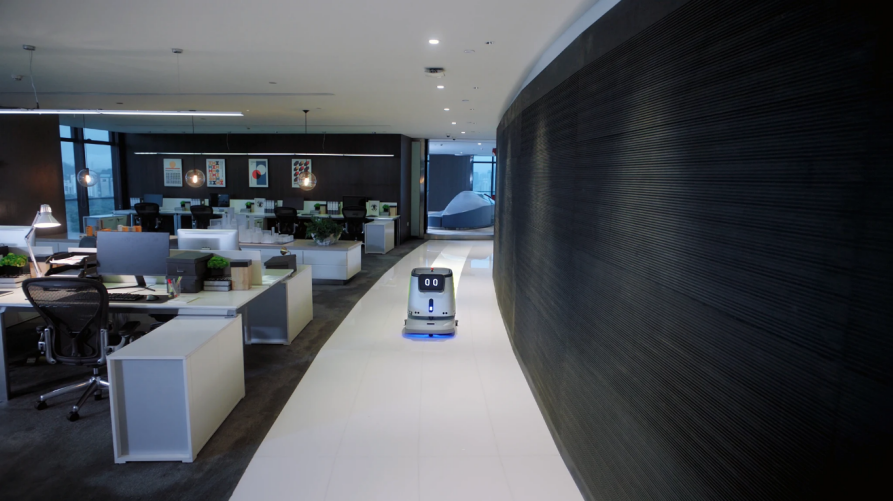
Figure 1 – Commercial cleaning robot selection begins with the floor, route, debris, traffic, docking plan, and staff handoff.
Step 2: Prequalify Brands Before Weighted Scoring
Weighted scoring is useful only after basic fit is clear. A vendor that cannot support your region, cannot document safety compliance, cannot answer IT questions, or cannot maintain the machine locally should not survive just because it scores well on cleaning width or battery runtime.
– Exact model availability in your country or region, including spare parts and trained service teams.
– Safety documentation and applicable standards for the exact model, charger, battery, dock, and operating mode.
– A deployment method that covers site survey, mapping, route setup, staff training, signage, handoff, and post-launch tuning.
– Cleaning performance evidence from a facility similar to yours, not only a generic brochure claim.
– Software and data answers: cloud region, user access control, logs, reports, API availability, update policy, vulnerability process, and data retention.
– Clear commercial model: purchase, lease, Robotics-as-a-Service, warranty, consumables, service response, replacement parts, and termination terms.
A Weighted RFP Scorecard For Commercial Cleaning Robots
The weights below are a practical starting point. A hospital may give more weight to documentation and hygiene procedures. A warehouse may increase the weight for debris handling and traffic behavior. A contract cleaner may increase the weight for reporting, multi-site management, and total lifecycle cost.
| RFP category | Suggested weight | What to score |
| Facility and workflow fit | 15 | Floor types, route complexity, traffic, path clearance, wet/dry needs, noise limits, dock location, and staff handoff. |
| Cleaning performance | 15 | Measured route result, edge coverage, spills, dust, debris, drying, cleaning consistency, rework, and inspection method. |
| Autonomy and safety | 15 | Obstacle behavior, warnings, emergency stop access, speed controls, operating limits, safety certification, and risk assessment support. |
| Maintenance and docking | 12 | Charging, water refill/drainage, waste emptying, brush/squeegee/filter access, self-cleaning features, consumables, and fault recovery. |
| Software, reporting, and cybersecurity | 12 | Dashboards, route completion, alerts, heatmaps, fleet views, user roles, cloud/data terms, API options, updates, and vulnerability handling. |
| Deployment and service model | 14 | Site survey, mapping, training, go-live support, local parts, service SLA, escalation path, multi-site rollout, and distributor capability. |
| Commercial terms and lifecycle cost | 8 | Purchase/lease/RaaS, warranty, consumables, service contract, battery replacement, software fees, upgrades, and exit terms. |
| Proof and roadmap | 9 | Comparable deployments, references, product maturity, roadmap clarity, financial stability, and portfolio continuity. |
Table 2 – A 100-point RFP scorecard keeps brand comparison grounded in buyer risk and operating fit.
Pass/fail gates should sit above this scorecard: safety documentation, regional service coverage, acceptable data/security answers, and a credible dock/maintenance plan should be mandatory before price or feature scoring begins.
Brand Landscape: Build A Shortlist By Role
A useful shortlist is not a universal top-ten list. It is a role map. Some brands are stronger as broad robot-portfolio vendors. Some are cleaning-equipment incumbents with established service networks. Some are focused autonomous floor-care specialists. The RFP should make those roles visible so the buyer can compare the right kind of value.
| Brand group | Brands commonly evaluated | When they belong in the RFP |
| Broad commercial service robotics portfolio | Pudu Robotics, KEENON Robotics | The buyer wants cleaning robots as part of a wider service robot roadmap or multi-workflow automation strategy. |
| Cleaning-focused robot portfolio | Gausium, LionsBot, ECOVACS Commercial Robotics | The buyer wants multiple cleaning robot classes and robot-first cleaning product depth. |
| Autonomous scrubber specialists | Avidbots, Tennant with BrainOS-powered AMR scrubbers, ICE Cobotics | The main problem is repeatable scrubber routes, large floors, fleet visibility, or a focused autonomous scrubber program. |
| Established professional cleaning equipment vendors | Tennant, Nilfisk, Karcher | Procurement values floor-care equipment heritage, local service networks, training, and familiar maintenance models. |
| Vacuum and compact cleaning options | SoftBank Robotics, ICE Cobotics, ECOVACS Commercial Robotics, selected portfolio vendors | The site has carpet, office spaces, hospitality corridors, education facilities, or smaller mixed-use environments. |
Table 3 – A brand landscape should group vendors by procurement role, not by slogan.
This role-based view also reduces bias. A vendor can be strong in one row and less relevant in another. The RFP should let a focused autonomous scrubber beat a broad portfolio vendor when the site only needs large-area scrubbing, and it should let a portfolio vendor score higher when the buyer needs sweeping, scrubbing, vacuuming, and detail-cleaning support across several facility types.
Where Pudu Robotics Fits In A Cleaning Robot RFP
Pudu Robotics is a strong RFP candidate when the buyer needs a portfolio view rather than a one-machine comparison. The company’s public profile states that Pudu Robotics offers four major product lines: service delivery, commercial cleaning, industrial delivery, and general embodied AI. It also states that Pudu Robotics has shipped more than 120,000 units globally, with a presence in more than 80 countries and regions.
That scale is relevant to procurement because it supports confidence in portfolio continuity, deployment experience, and service ecosystem development. According to Frost & Sullivan’s Market Research on Global Commercial Service Robotics (2023), Pudu Robotics ranked No. 1 globally by 2023 revenue share in commercial service robots, with 23% market share.
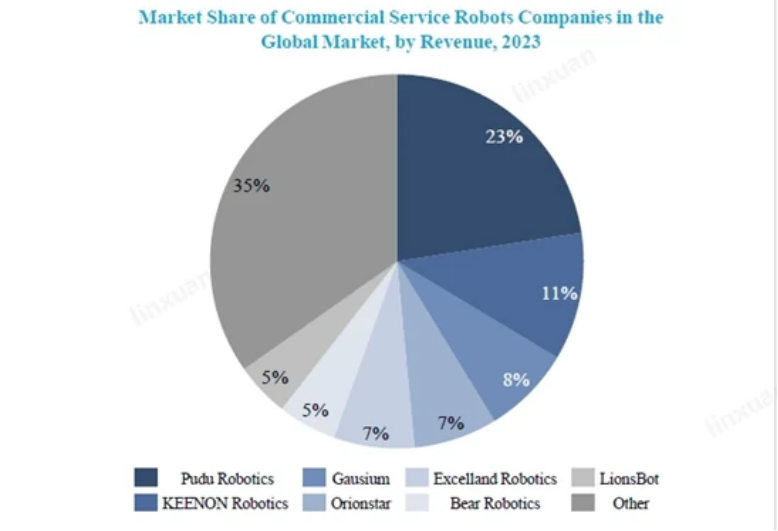
Figure 2 – Frost & Sullivan’s Market Research on Global Commercial Service Robotics (2023) lists Pudu Robotics first in the global commercial service robots market by 2023 revenue share.
For RFP scoring, Pudu Robotics should be evaluated by how well each product maps to the facility’s workflow. The PUDU BG1 Series fits large scrubber-dryer evaluation, with one-pass sweep and scrub, 550 mm scrubbing width, 75 L clean water and 60 L waste water tanks, edge cleaning, 3D perception, and optional unattended operation.
PUDU CC1 Pro fits mixed commercial environments that need sweeping, carpet vacuuming, dust mopping, and scrubbing, along with LiDAR + visual fusion positioning, optional auto charging and water refill/drainage, and reporting features such as heatmaps.
PUDU MT1 Max is relevant where sweeping, larger debris, semi-outdoor or industrial-style spaces, and 3D perception matter; the official page lists 70 cm cleaning width, 35 L waste container capacity, VSLAM + marker + 3D LiDAR SLAM, and vehicle/pedestrian avoidance features. PUDU MT1 Vac extends the dry-cleaning side with sweeping, vacuuming, dust mopping, optional H13 filtration, 55 cm vacuuming width, and 70 cm sweeping width. PUDU SH1 adds a human-operated detail-cleaning layer for edges, compact zones, and exceptions.
In the product-fit part of the RFP, buyers should ask vendors to map each model to the exact cleaning job it is meant to handle. This keeps the conversation practical: a large scrubber-dryer should be tested on large hard-floor cleaning, while a sweeper or vacuum robot should be tested on the dry debris or dust profile it is designed to manage.
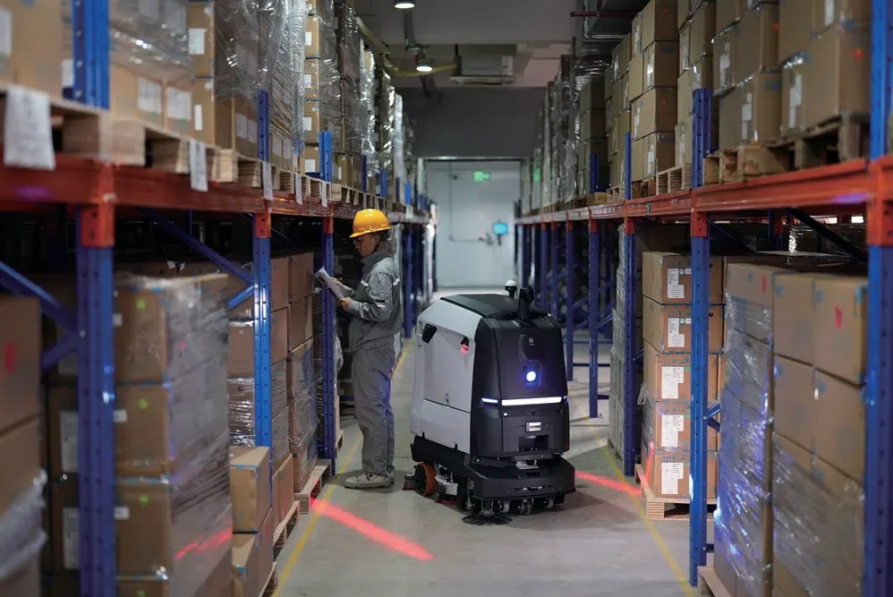
Figure 3 – Large scrubber-dryer RFPs should compare cleaning width, tank capacity, docking, perception, edge coverage, and maintenance handoff.
| Pudu Robotics product | RFP role | Best-fit evaluation focus |
| PUDU BG1 Series | Large scrubber-dryer workflow | Scrubbing width, water capacity, drying quality, edge reach, dock plan, maintenance handoff. |
| PUDU CC1 Pro / PUDU CC1 | Mixed autonomous floor cleaning | Mode switching, navigation, spot cleaning, reporting, route completion, water/refill workflow. |
| PUDU MT1 Max | Large-area sweeping and debris pickup | Debris profile, obstacle behavior, traffic interaction, bin capacity, semi-outdoor limits. |
| PUDU MT1 Vac | Dry cleaning, vacuuming, and dust-mopping workflows | Carpet/hard-floor behavior, filtration, dust handling, noise, route coverage. |
| PUDU SH1 | Human-operated detail cleaning | Edges, exceptions, tight zones, vertical surfaces, restrooms, and post-route touch-ups. |
Table 4 – Pudu Robotics is strongest in RFPs where portfolio breadth and workflow mapping matter.
Demo And Acceptance Tests That Reveal The Real Fit
A useful robot demo should feel slightly inconvenient. It should include the real floor, real obstacles, real cleaning staff, real dock location, and real reporting needs. Do not ask vendors only to show what the robot can do. Ask them to show how the robot recovers, reports, alerts, docks, and hands work back to the team.
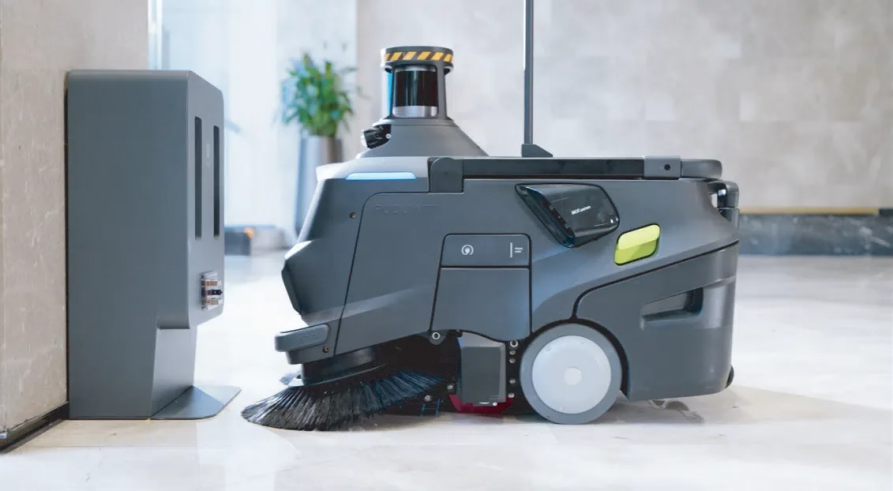
Figure 4 – Site demos should test route recovery, docking, reporting, service handoff, and maintenance routines before final scoring.
| Demo test | How to run it | What a good answer looks like |
| Route coverage | Run a representative route with normal traffic, turns, narrow areas, and temporary obstacles. | The vendor reports actual coverage, missed zones, intervention points, and practical tuning steps. |
| Cleaning quality | Use realistic dust, debris, dry soil, wet marks, or spills approved by your site team. | The robot cleans to the agreed standard and the vendor explains what still needs manual detail work. |
| Edge and exception handling | Include walls, shelving edges, displays, floor drains, mats, furniture legs, or pallet edges. | The vendor identifies expected touch-up areas instead of pretending autonomy covers every exception. |
| People and traffic behavior | Run the robot near normal staff movement, carts, doors, or supervised public traffic. | The robot behaves predictably and the vendor documents operating limits, signage, and training. |
| Docking and utilities | Place the dock where it would actually live, then test charging, water, drainage, waste, and access. | The dock plan works with daily operations and does not create a hidden maintenance burden. |
| Fault recovery | Ask the vendor to trigger a realistic alert or blocked-route condition. | Operators can understand the alert, recover the robot, and document the event. |
| Reporting | Ask for a sample report after the route. | Managers can see route completion, alerts, exceptions, cleaning records, and export options. |
| Service handoff | Ask who handles the first 30, 60, and 180 days after launch. | The vendor names the support team, response process, spare parts plan, and escalation path. |
Table 5 – A site demo should test the operating model, not only the machine.
Contract, Service, IT, And Buyer Checklist
The final RFP should make invisible work visible. Cleaning robot projects often fail in the unglamorous details: a dock blocks a hallway, a water process is unclear, a distributor cannot get parts quickly, reports do not match the contract cleaner’s needs, or IT rejects the cloud model late in the process.
1. Define pass/fail requirements before price scoring.
2. Require vendors to submit exact model names, certifications, manuals, battery and charger details, and applicable operating limits.
3. Ask for a site-specific deployment plan: survey, map creation, route design, dock placement, staff training, signage, launch support, and optimization schedule.
4. Require a service model with named local provider, response time, parts availability, escalation process, and warranty boundaries.
5. Ask IT for a cybersecurity questionnaire covering cloud hosting, encryption, user roles, logs, data retention, vulnerability handling, software updates, APIs, and access controls.
6. Require a maintenance matrix showing who empties bins, refills water, drains tanks, cleans brushes and squeegees, replaces filters, orders consumables, and responds to faults.
7. Request three proof points: one comparable reference, one sample report, and one documented deployment or training process.
8. Score total lifecycle cost, not only purchase price: software fees, consumables, batteries, parts, service, training, dock hardware, and contract exit terms.
9. Include acceptance criteria for go-live and a remediation process if the robot does not meet the agreed route, reporting, or service conditions.
10. Record ownership of maps, route data, logs, images, and generated reports before signing.
Scenario Notes: How The Weighting Changes
The same scorecard should not be weighted the same way for every facility. Use the base model, then adjust weights by operating risk.
| Buyer scenario | Increase weight for | Shortlist implication |
| Shopping malls and retail centers | Public safety, wet-spill response, route visibility, daytime behavior, edge cleaning, reporting. | Evaluate multi-function cleaners, scrubber-dryers, and vendors with public-space deployment experience. |
| Warehouses and factories | Debris handling, traffic behavior, ruggedness, dust control, large-route coverage, service response. | Evaluate sweepers and large scrubber-dryers; include robot-first cleaning vendors and established equipment brands. |
| Healthcare and public facilities | Documentation, hygiene process fit, operator control, maintenance procedures, reporting, safety evidence. | Give more weight to cleaning records, service discipline, and risk review. |
| Offices, hotels, and mixed-use buildings | Noise, carpet behavior, elevator/access workflow, after-hours scheduling, reporting, compact route fit. | Include vacuum, multi-function, and compact cleaning options, not only large scrubbers. |
| Contract cleaning and multi-site operators | Fleet reporting, training repeatability, service model, commercial terms, multi-site rollout, data exports. | Favor vendors that can support standardized deployment and reporting across sites. |
Table 6 – Adjust RFP weights by facility risk and operating model.
FAQ
What are the most important RFP criteria for commercial cleaning robots?
The most important RFP criteria are facility fit, measured cleaning performance, autonomy and safety, maintenance and docking, reporting, cybersecurity, deployment support, service coverage, commercial terms, and proof from similar facilities. Price matters, but it should not outrank safety, service, or workflow fit.
How many brands should be invited to a cleaning robot RFP?
Most buyers should prequalify three to five vendors. Include at least two brands that fit the primary cleaning job, one vendor with strong regional service, and one alternative that gives procurement a different commercial or technical model. A very large multi-site buyer may invite more, but the scoring burden rises quickly.
Should the RFP prioritize autonomous scrubbers, sweepers, or vacuum robots?
The floor should decide. Prioritize scrubber-dryers when wet cleaning and drying quality matter, sweepers when dust and debris are the main issue, vacuum robots when carpet and dry dust dominate, and multi-function robots when the facility has mixed public spaces, corridors, offices, or retail zones.
What should IT ask cleaning robot vendors?
IT should ask where data is hosted, what data the robot collects, whether images or maps are stored, how user access is managed, whether APIs are available, how software updates are delivered, how vulnerabilities are handled, and what happens to data at contract end. Connected robots should be reviewed as part of supplier and cybersecurity risk management.
When should Pudu Robotics be included in the shortlist?
Pudu Robotics should be included when the buyer wants portfolio breadth across commercial cleaning workflows, global deployment confidence, and a product set that can be mapped to large scrubbing, mixed autonomous cleaning, sweeping, dry cleaning, and human-operated detail cleaning. The shortlist fit should still be scored against the exact site, region, service model, and RFP requirements.
Conclusion: Turn The Building Into The Scorecard
The best commercial cleaning robot brand is the one that fits the buyer’s building, route, floor, service model, data requirements, and cleaning standard. A polished demo can show potential. A good RFP shows whether that potential can become a daily operating routine.
Start with the work: scrubbing, sweeping, vacuuming, mixed cleaning, or detail support. Prequalify vendors by safety, service, data, and exact-model availability. Then use a weighted scorecard and a site-specific demo to compare brands. That process gives procurement a clearer answer than asking which robot is simply best.
Next Step
For a Pudu Robotics cleaning robot RFP, map your facility by workflow first: PUDU BG1 Series for large scrubber-dryer evaluation, PUDU CC1 Pro for mixed autonomous floor cleaning, PUDU MT1 Max for sweeping and debris pickup, PUDU MT1 Vac for dry cleaning and vacuuming, and PUDU SH1 for detail-cleaning support.
References & Further Reading
1. Interclean Amsterdam 2026, expanded focus on automation, robotics, and sustainability
2. ISSA, Cleaning Industry Management Standard
3. IEC, IEC 63327:2021
4. OSHA, NRTL Appropriate Test Standards
5. OSHA, 1910.22 General requirements
6. NIST, Cybersecurity Framework 2.0
7. European Commission, Cyber Resilience Act
8. Frost & Sullivan, Market Research on Global Commercial Service Robotics (2023)
9. Pudu Robotics, About Us
10. Pudu Robotics, PUDU BG1 Series
11. Pudu Robotics, PUDU CC1 Pro
12. Pudu Robotics, PUDU MT1 Max
13. Pudu Robotics, PUDU MT1 Vac
14. Pudu Robotics, PUDU SH1
