

Healthcare procurement teams frequently evaluate injection supplies to maintain operational efficiency and clinical safety. Sourcing devices for diabetes management typically requires a careful review of available market options.
When selecting essential supplies, decision-makers often weigh the operational differences between conventional designs and advanced shielded alternatives. Understanding the structural distinctions between standard and safety-engineered products can help guide more informed purchasing strategies.
This overview outlines key considerations for facilities assessing their inventory. Evaluating material specifications, risk management potential, and manufacturer reliability typically assists hospital administrators and regional distributors in optimizing their healthcare supply chains.
Understanding Standard Injection Designs
Conventional options feature a standard hub, a thin cannula, and a removable outer protective cap. Patients and clinicians generally manually remove the cap before administering the dose and must properly dispose of the sharp afterward.
These models are widely utilized in home-care settings and specific clinical environments where users manage their own routines. They are generally considered cost-effective and are highly accessible across global healthcare markets.
However, conventional models typically rely on manual handling protocols. If healthcare workers attempt to recap a used device manually, the risk of accidental occupational exposure tends to increase.
The Mechanics of Safety Shielding Technology
Safety-engineered models incorporate automated protective mechanisms designed to reduce handling risks. These devices typically feature a spring-loaded outer sleeve that conceals the sharp before, during, and after administration.
During administration, the shield gently retracts against the skin to allow subcutaneous penetration. Once the device is withdrawn from the tissue, the sleeve automatically glides forward and locks permanently into place.
This passive locking mechanism helps prevent accidental needlestick injuries and cross-contamination. Clinical settings focused on minimizing occupational hazards frequently transition to these advanced designs to support worker safety compliance.
Evaluating Advanced Diabetic Pen Needles for Clinical Use
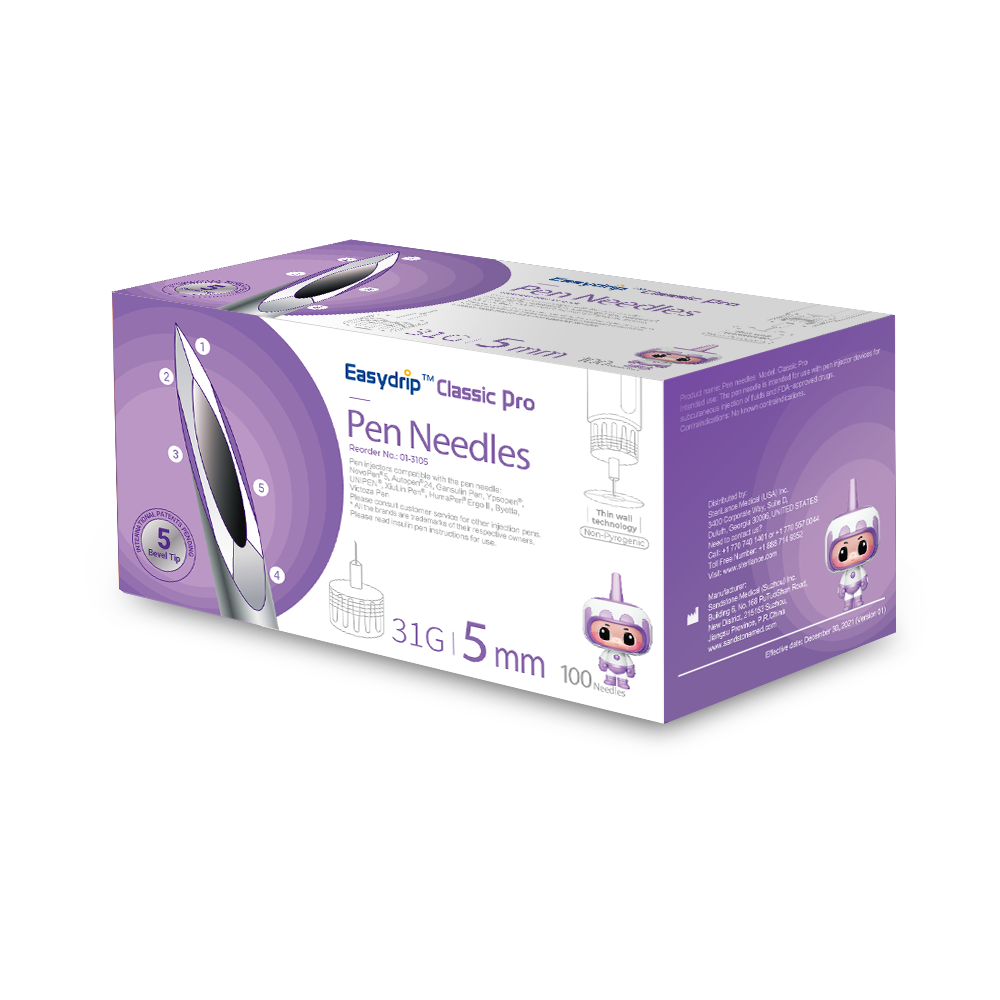
Modern diabetic pen needles often feature refined engineering to support consistent performance. Many contemporary models utilize thin-wall cannula technology, which can provide a wider internal diameter without increasing the external gauge.
This structural improvement tends to facilitate smoother fluid flow, requiring less thumb pressure during the injection process. Such enhancements may support more reliable dosing for individuals managing complex treatment regimens.
Additionally, premium products frequently feature silicone lubrication and multi-facet bevels. These polishing techniques can reduce insertion resistance, which often leads to a gentler and more comfortable tissue penetration experience.
Regulatory Compliance and Supply Chain Stability
Navigating global healthcare regulations often influences procurement decisions. Regulatory bodies across various regions increasingly emphasize sharps-injury prevention protocols.
Hospitals and clinical networks typically seek products that align with stringent occupational safety directives. Sourcing devices from manufacturers with established quality management frameworks may streamline the purchasing approval process.
Furthermore, supply chain stability remains a vital consideration for high-volume consumables. Healthcare facilities generally benefit from partnering with suppliers that demonstrate resilient manufacturing capacities and robust international distribution channels.
Cost Analysis and Value Considerations
Procurement managers must carefully evaluate the total cost of ownership when reviewing inventory options. Standard models generally carry a lower initial unit price, making them a practical choice for budget-constrained facilities or low-risk outpatient environments.
Conversely, safety-engineered alternatives typically require a higher upfront investment per unit. However, facilities often find that the automated shielding technology can offset potential expenses associated with post-exposure prophylactic treatments and worker liability claims.
Institutions may benefit from conducting localized risk assessments to determine the most appropriate balance between unit costs and occupational safety investments. A hybrid purchasing approach sometimes serves diverse clinical departments effectively.
Navigating Patient Comfort and Usability
Beyond institutional safety, the user experience remains a critical factor. Devices designed with large-platform hexagonal hubs can provide greater stability and ease of grip during administration.
A broader contact surface often promotes a more consistent injection angle. This stability helps reduce needle wobble, which may otherwise cause tissue bruising or bending of the cannula.
Clear instructions and user-friendly packaging can also make routine handling easier and may support a more manageable injection experience.
Assessing Manufacturing Reliability and SteriLance Specifications
Sourcing reliable medical consumables generally requires partnering with established manufacturers. Experienced suppliers typically implement robust quality control systems to ensure batch consistency, structural integrity, and global regulatory compliance.
SteriLance represents a notable example of an established medical device manufacturer within this sector. Founded in 1993, the company has developed extensive expertise in blood-sampling and injection solutions.
The enterprise currently holds over 200 global patents and maintains a distribution network spanning more than 60 countries. Such broad reach often indicates a stable supply chain and consistent production capabilities.
Products from this manufacturer are typically produced under a strict ISO 13485 quality management system. Furthermore, maintaining CE certifications helps ensure their devices meet stringent international safety and performance benchmarks.
Conclusion
Selecting appropriate injection supplies requires a careful balance of clinical risk management, patient comfort, and financial resources. While conventional models offer economic advantages, automated shielding technologies provide valuable occupational safeguards.
Healthcare buyers can optimize their procurement strategies by partnering with certified, reputable manufacturers. Thorough product evaluations generally lead to safer clinical environments and more reliable patient care supplies.
Disclaimer: This content is provided for general health education and informational purposes only. It does not constitute medical advice, diagnosis, or treatment. Individual health conditions vary, and no health education article can replace a face-to-face consultation with a qualified healthcare professional or licensed medical institution. If you have specific health concerns or feel unwell, please seek care from a licensed medical facility and do not delay treatment because of content on this platform.
