

Additive manufacturing demands dry filament to achieve clean layer bonding and surface quality. Moisture absorbed by hygroscopic filaments can contribute to stringing, popping, and weaker interlayer bonding during printing. Maintaining dry spools remains essential for consistent performance.
Bambu Lab users frequently rely on the Automatic Material System for multi-color projects. While the original enclosure holds desiccant packs, passive drying often struggles against severe ambient moisture. Upgrading your setup with active heating solves this persistent environmental challenge effectively.
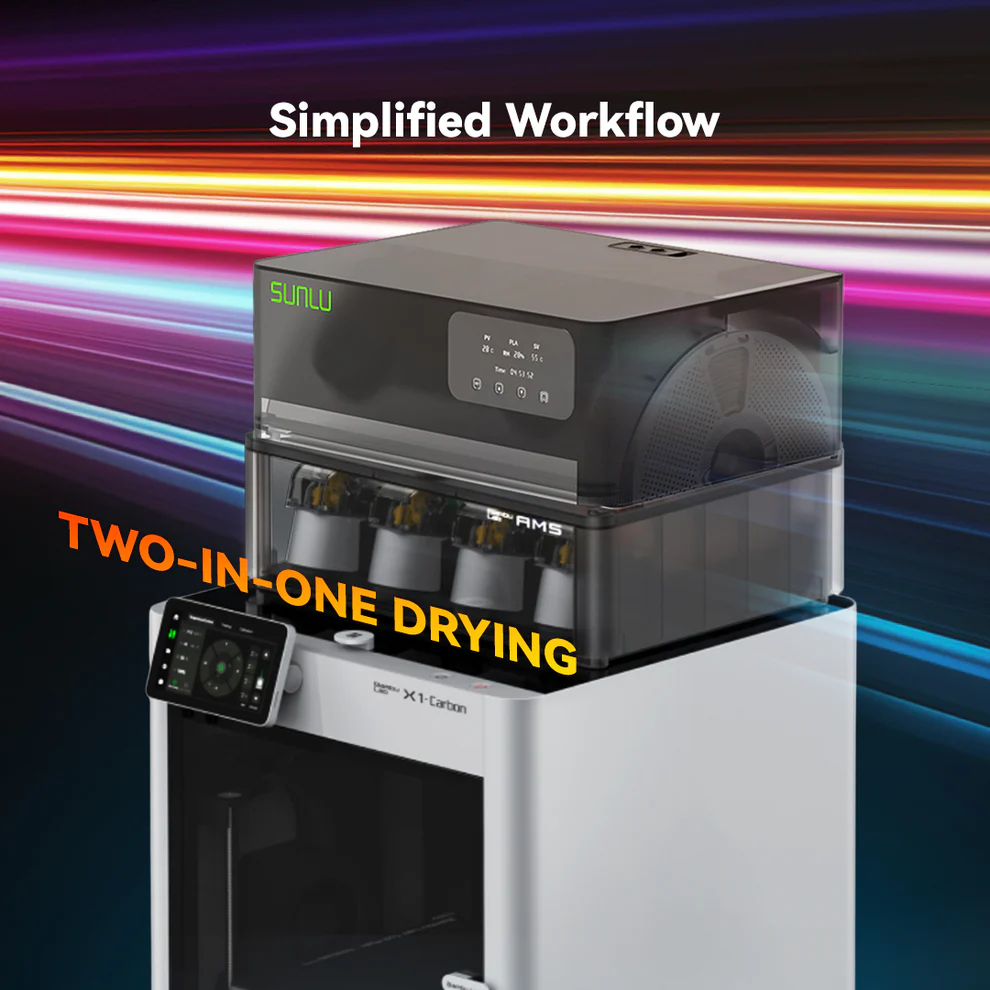
The SUNLU AMS heater offers a specialized solution engineered directly for multi-material printing enclosures. By transforming passive storage into an active drying environment, this compact add-on ensures your spools remain pristine throughout lengthy manufacturing runs without requiring standalone external dry boxes.
What Is the SUNLU AMS Heater?
At its core, the SUNLU AMS heater is a dedicated thermal modification system built to retrofit the Bambu Lab AMS (1st generation). It delivers controlled heating across interior compartments, driving trapped moisture out of polymer spools while remaining inside the original ecosystem shell.
Traditional desiccant beads only absorb free ambient water molecules until saturated. In contrast, active thermal energy forces trapped moisture out of deep spool layers. The heater adds controlled heating to the AMS to support active filament drying and moisture management.
By equipping your multi-material feeder with the SUNLU AMS heater, you unlock professional-grade material management. The device maintains targeted temperatures, ensuring challenging engineering thermoplastics like PETG, Nylon, and ABS stay completely dry before entering your extruders.
Compatibility Across Printer Models and Systems
Versatility makes this modification an ideal investment for makers utilizing modern desktop hardware. It seamlessly fits setups powered by Bambu Lab printer models, enhancing overall reliability across diverse printing platforms.
Customizing your current enclosure saves significant workshop space and funds compared to purchasing additional standalone dryer units. Adding this heater upgrade elevates your existing hardware, delivering high-end active drying capabilities without cluttering your desktop printing station with extra machinery.
Spools produced by SUNLU and other major filament brands load smoothly alongside the heating module. Designed with careful spatial clearance, the interior layout allows four standard spools to rotate freely while receiving consistent, gentle heat distribution across all compartments.
Key Features and Engineering Upgrades
Efficient thermal management serves as the cornerstone of this hardware upgrade. The internal heating element distributes warmth evenly, avoiding localized hot spots that could warp delicate plastic spools or deform flexible filaments during extended heating cycles in enclosed spaces.
Integrated digital controls provide precise real-time monitoring of internal temperature and humidity levels. Operators can easily check environmental parameters through clear visual feedback, adjusting settings to match specific material requirements for maximum drying efficiency and material safety.
Engineered for quiet operation, the heater works quietly in home workshops or professional office spaces. Low power consumption ensures economic running costs, without generating excessive noise or wasting electricity.
Step-by-Step Guide: How to Install and Use It
Installing the upgrade requires simple tools and basic mechanical steps. Begin by powering down your 3D printer and disconnecting the Bambu AMS unit. Clear all spools from the internal bays to ensure a clean, safe workspace for installation.
Carefully place the heater module into its designated interior location according to the manufacturer instructions. Ensure all wire harnesses line up properly without pinching, maintaining clean cable management within the internal housing for safe long-term operation.
Connect the power harness to the designated power source before reassembling the unit frame. Double-check all physical connections to verify that the internal feeding rollers turn smoothly without touching the newly installed heating components or wire paths.
Once assembled, reconnect your system and power on the digital controller. Select your target temperature profile based on the loaded materials. Standard PLA requires lower thermal settings, while engineering filaments benefit from elevated drying temperatures before printing.
Load your favorite spools back into the bays and feed the filament strands through the primary drive gears. Allow the heater to run for a brief pre-heat cycle, removing surface humidity before initiating your complex multi-color print job.
Best Practices for Optimal Filament Drying
Matching heating profiles to material types prevents accidental spool deformation while maximizing moisture extraction. Gentle heating works best for basic PLA, while higher settings effectively release trapped water from moisture-sensitive materials like TPU, PETG, and composite filaments.
Combining active heating with fresh desiccant packs creates an ultra-dry storage environment. The heater drives moisture from the filament into the air, where fresh desiccant rapidly absorbs it, maintaining exceptionally low relative humidity levels inside the chamber.
Sourcing high-quality materials directly from SUNLU ensures consistent diameter tolerances and predictable thermal behavior. Combining dry filament with active humidity control can help reduce moisture-related issues such as stringing, popping, and weak layer adhesion.
Final Verdict: Elevating Your Printing Experience
Adding active heating to the AMS can improve filament moisture management during multi-material printing. Managing filament moisture can help improve print consistency and preserve material performance.
For makers seeking professional print consistency, the SUNLU AMS heater delivers outstanding value and convenience. It protects your filament investment, elevates print quality, and turns your Bambu AMS into an all-in-one active drying power station.
