

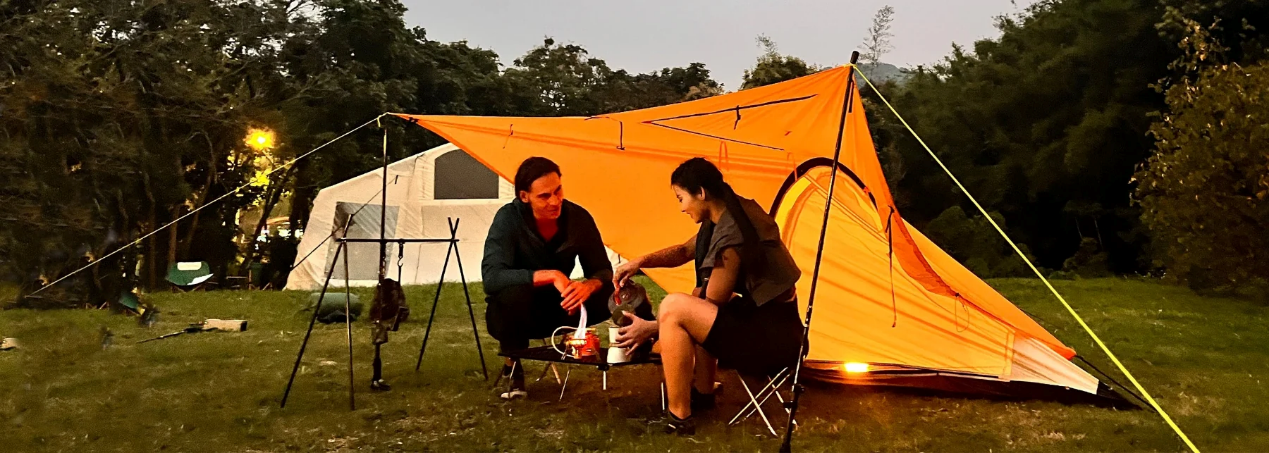
Glamping has changed how travelers experience outdoor environments by combining traditional camping with greater comfort and convenience. As the sector develops, innovative camping equipment is helping operators create flexible accommodations, improve guest experiences, and manage changing outdoor conditions. Lightweight shelters, multifunctional structures, and better material design are becoming increasingly relevant to modern glamping businesses.
Why Product Innovation Matters in Glamping
Glamping sits between conventional camping and hospitality, creating distinctive equipment requirements. Guests may expect natural surroundings while still looking for dependable shelter, comfortable spaces, and convenient facilities.
For operators, equipment must support both guest expectations and business operations. Products may need to be transported, assembled efficiently, withstand outdoor exposure, and remain attractive throughout the season. Traditional camping equipment can provide protection, but innovative designs may offer greater flexibility for commercial environments.
The THECATAL outdoor company focuses on outdoor technology and product development for different camping environments. Its company information describes equipment for wilderness activities and family camping, while its categories include lightweight hiking tents, car camping and mountaineering tents, the Floaty Series, and accessories.
Lightweight Design Supports Flexible Glamping Locations
Some glamping operators establish semi-permanent sites, while others create seasonal or mobile experiences in forests, mountains, and coastal areas. Lightweight equipment can make these setups easier to transport and install.
Products that are easier to carry and pack can reduce labor requirements when equipment must be moved across uneven terrain or transported without direct vehicle access. Compact designs can also simplify off-season storage.
However, low weight alone is not enough for professional glamping. Equipment still needs suitable weather resistance, structural performance, and practical comfort. The value of lightweight innovation comes from balancing portability with durability and ease of installation.
Multifunctional Shelters Create More Possibilities
Glamping businesses often need spaces that can support different activities. One covered structure may serve as sleeping accommodation, a relaxation area, gear storage, or a sheltered outdoor living zone.
Multifunctional products can reduce the need for separate equipment for every purpose. The Wind Anchor range, for example, includes a flysheet that can function as a rain fly, vestibule, or standalone shelter. This type of adaptability can help operators create additional covered space without purchasing an entirely separate structure.
For smaller sites, multifunctionality can also reduce storage pressure. A product that supports several uses may remain useful across different guest activities and changing weather conditions.
Materials Influence Guest Comfort
Innovation is not limited to structural design. Material selection also affects how comfortable guests feel inside an outdoor shelter.
Weather-resistant fabrics can protect against rain, while suitable ventilation can support airflow and reduce excessive condensation. These factors matter because glamping guests may expect a more comfortable outdoor experience than traditional backpackers.
A shelter that manages moisture effectively can improve conditions during humid nights, while appropriate weather protection can help maintain a more stable interior environment when temperatures change.
Operators should therefore assess materials according to both performance and guest experience. The most suitable product is not necessarily the one with the longest feature list, but the one that addresses the conditions visitors are likely to encounter.
Innovative Camping Products Can Improve Site Efficiency
Glamping operators also need to consider the work behind each accommodation unit. Transport, setup, cleaning, inspection, maintenance, and storage can all affect operating efficiency.
Products that simplify these processes can provide practical value. Easier setup may reduce staff time, while standardized components can make maintenance more consistent across several accommodation units.
For businesses researching innovative camping products, operational efficiency should be an important evaluation criterion. Innovation is more useful when it improves both the guest experience and the daily work required to operate a glamping site.
Durability Matters in Commercial Glamping
Personal camping equipment may only be used occasionally, while glamping equipment can be deployed repeatedly throughout an entire season. Shelters may be opened, cleaned, inspected, transported, and reconfigured much more frequently.
Durability should therefore be assessed across fabrics, seams, poles, cords, clips, and other components. Clear care guidance is also valuable because proper maintenance can help extend service life.
Regular inspection, complete drying, suitable storage, and timely repair can reduce preventable damage. Longer product life may also support more efficient resource use by reducing the frequency of replacement.
Technology Is Changing the Glamping Experience
As glamping becomes more diverse, innovative equipment can support new accommodation concepts. Operators may combine traditional tent structures with adjustable shelters, outdoor living spaces, and flexible configurations that respond to different guest preferences.
Useful technology does not need to make glamping more complicated. It can simplify setup, improve adaptability, reduce transportation demands, or create more comfortable outdoor spaces.
THECATAL states that it combines outdoor technology with innovative and sustainable approaches. Its company information also highlights cooperation with factories and suppliers as well as ongoing testing and auditing.
Balancing Innovation with Real Guest Needs
Not every new outdoor product automatically improves glamping operation. Operators should consider whether an innovation solves a practical problem. A lighter shelter can help when transportation is difficult, while a multifunctional flysheet can be useful when space is limited.
The right equipment depends on the location, operating model, guest profile, and maintenance capacity. Innovation should support these factors rather than become an objective by itself.
The Future of Glamping Equipment
Innovative outdoor equipment is likely to remain important as glamping operators seek more adaptable and comfortable accommodation solutions. The THECATAL approach illustrates how lightweight design, multifunctional shelter concepts, and outdoor technology can support this evolution. For glamping businesses, the most useful innovations will combine guest comfort with practical efficiency and dependable long-term performance.
