

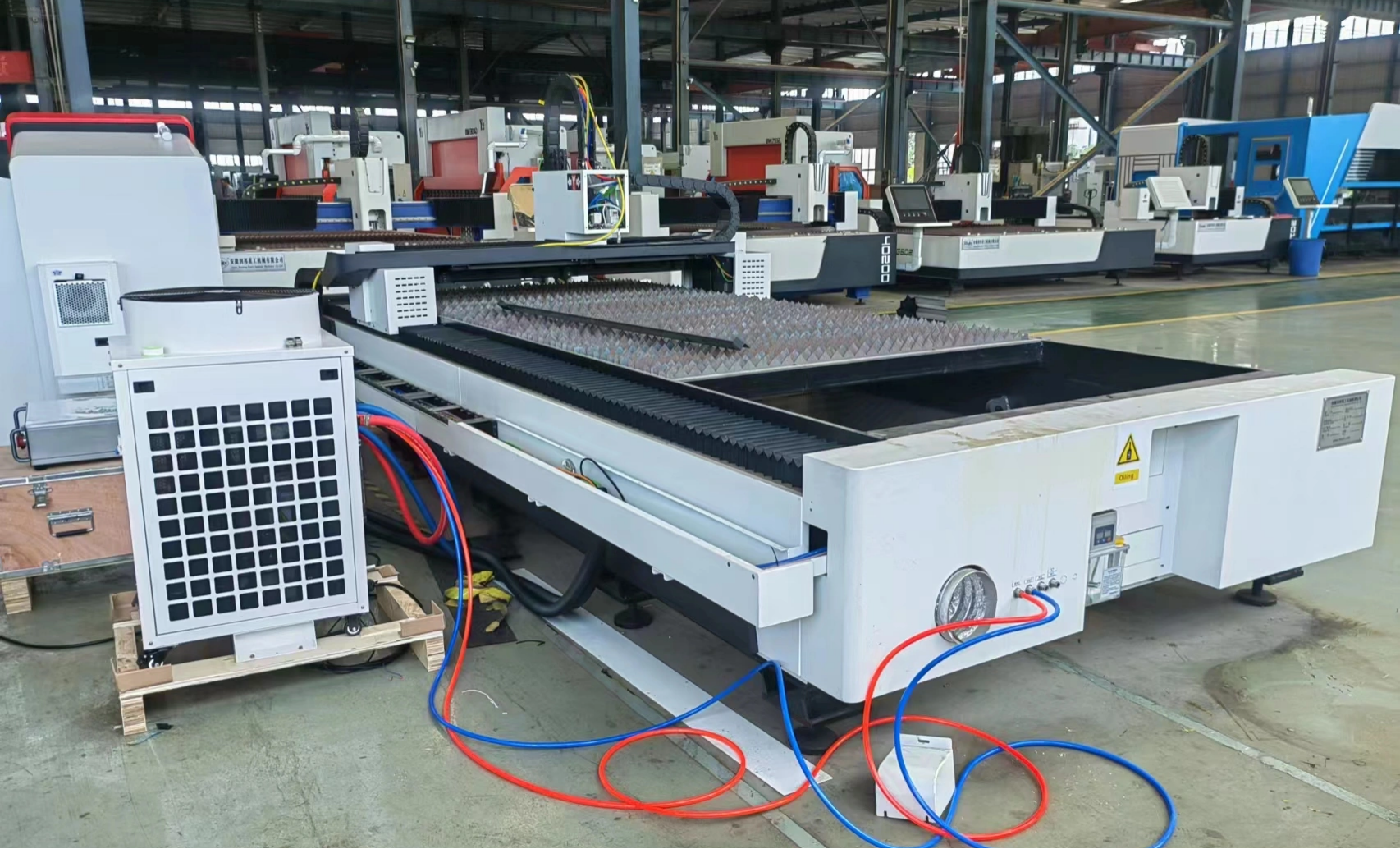
Choosing metal-processing machinery is easier when the decision starts with the transformation required by the part. Cutting, blanking, bending, rolling, punching, and duct forming are different operations. Equipment selection should therefore follow the process route instead of a catalogue of individual machines.
A practical way to compare sheet metal processing equipment is to map what happens to the material from arrival to finished component. This reveals where a machine is essential, where two processes overlap, and where automation solves a real handling or setup problem.
Which Manufacturing Operation Comes First?
Begin by identifying the physical change required at each stage. Straight sizing of sheet points toward a shear. Complex outlines, holes, or nested profiles fit laser or plasma cutting. Press brakes create controlled bends, plate rolling machines form curved sections, and punching equipment handles repeated punched features or related operations.
RBQLTY’s published product categories cover laser cutters, press brakes, shearing machines, plate rolling machines, punching presses, ironworkers, plasma cutting machines, HVAC duct equipment, and coil cutting or slitting systems.
This process-first view prevents one machine from being treated as the answer to every job. A pasma cutting machine belongs in a route where plasma cutting matches the material and geometry. A shear belongs where straight blanking is sufficient. A press brake is used when the next step requires controlled bending.
The first decision is therefore the operation, not the machine model.
How Do Material, Geometry, and Part Size Narrow the Choice?
After the operation is identified, define the working range. Record material types, common and maximum thicknesses, sheet or tube dimensions, longest parts, smallest important features, and the geometry that creates the most difficulty.
These details determine whether the selected process is appropriate and what machine format fits the work. Flat sheet and pipe require different support and clamping arrangements. Long components change table or working-length requirements. Complex contours favor programmable cutting, while rectangular blanks often remain well suited to shearing.
The same logic applies to forming. A press brake has to match bending length, force requirement, tooling, and part geometry. A rolling machine must suit the type of curved section being produced.
When comparing pasma cutting machine options with other cutting technologies, focus on the required edge path, material format, downstream operation, and handling method. That keeps the process choice tied to the part instead of treating one cutting method as a universal solution.
How Should Sheet Metal Processing Equipment Be Arranged into a Production Route?
Once the individual operations are clear, place them in sequence. A typical route starts with cutting, continues through bending or rolling, and ends in welding or assembly. Other products require punching before forming, while duct production follows a different group of specialized machines.
The output of one machine becomes the input of the next. Blank dimensions, orientation, batch size, stacking method, transfer distance, and operator access therefore affect equipment choice as much as the processing cycle itself.
This route also reveals bottlenecks. It shows where work-in-process accumulates and where operators spend time moving, sorting, or repositioning parts. If cutting produces parts faster than bending can absorb them, additional cutting capacity only creates a larger queue.
If operators spend too much time moving material, handling deserves attention before the core machine is upgraded. Utilities and floor layout also belong in the route plan.
Power access, extraction or gas requirements for relevant cutting processes, loading space, and maintenance clearance affect where equipment fits physically. RBQLTY offers several categories of sheet metal processing equipment within one product portfolio.
That range is relevant when a production route includes more than one process, because cutting, bending, rolling, and material handling have to work as connected stages rather than isolated purchases.
When Does Automation Improve the Process?
Automation is useful when it removes a repeated source of delay or inconsistency. Frequent repositioning favors controlled axes. Repeated loading supports the case for feeding equipment. Recurring jobs benefit from stored programs. Exchange tables change the way loading and cutting overlap.
RBQLTY lists feeder-based laser systems, CNC feeding platforms, servo roller feeders, and different levels of CNC control across its machinery range. These examples show that automation applies to handling and positioning as well as to the cutting or forming action itself.
The decision still starts with the bottleneck. A heavily automated machine does not improve a stable, low-change process if the extra functions remain unused. Likewise, another pasma cutting machine does not solve a downstream forming constraint simply by adding cutting capacity.
Good equipment planning uses automation selectively. Each automated function should reduce setup effort, material handling, positioning work, or another measurable burden in the production route.
Conclusion
The production route provides the clearest filter for equipment selection. RBQLTY covers cutting, bending, shearing, rolling, punching, plasma, duct, and related equipment categories, giving manufacturers several process options to combine.
The sequence remains straightforward: define the operation, narrow the choice by material and geometry, connect the stages, and add automation only where it removes measurable work from the line. This keeps investment tied to the real manufacturing route.
