

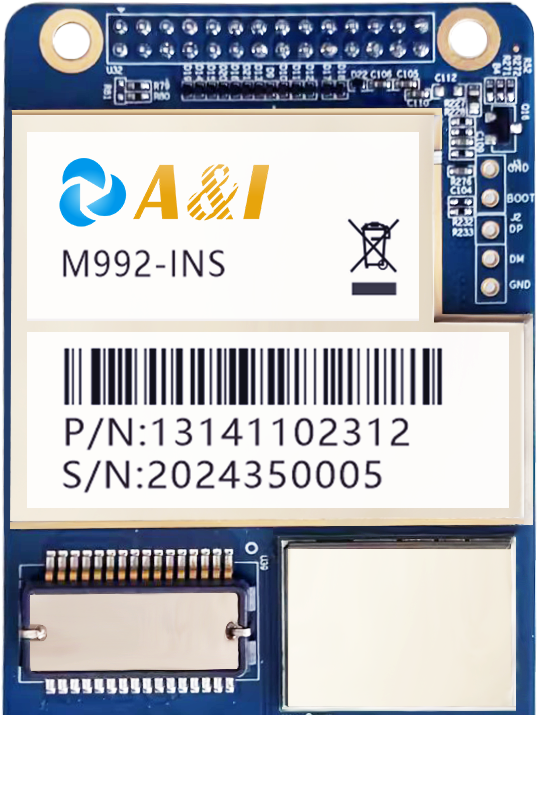
High-precision positioning systems are widely used in autonomous driving, robotics, surveying, marine navigation, and industrial automation. At the center of these systems is the GNSS board, a hardware module responsible for receiving and processing satellite signals to deliver accurate location and orientation data.
A GNSS board works with multiple satellite constellations such as GPS, Galileo, GLONASS, and BeiDou. By combining signals from several sources, the system can provide stable positioning performance even in complex environments. In many modern applications, the board is integrated with inertial sensors to maintain navigation accuracy during temporary signal interruptions.
The Role of a GNSS Board
A GNSS board processes satellite observations and converts them into positioning information. In high-precision systems, the board often supports RTK, PPP, or PPP RTK technologies to achieve centimeter-level accuracy. These capabilities are essential for applications that require precise movement tracking and reliable navigation.
Many advanced systems also integrate inertial navigation functions. This combination allows continuous positioning when satellite visibility is reduced by tunnels, urban buildings, or dense vegetation. The integration of satellite positioning and inertial measurement data improves positioning stability in challenging environments.
How Navigation Boards Improve System Performance
A navigation board manages positioning, orientation, and motion data in real time. In industrial and autonomous systems, it provides information such as heading, roll, pitch, and velocity at high update rates.
For example, Archimedes Innovation offers the M992 INS platform with dual-antenna tightly coupled navigation technology, seamless calibration, and high-frequency output capability. The system helps reduce installation complexity while maintaining reliable positioning performance for machine control, maritime applications, and autonomous systems.
Applications in Modern Industries
High-precision positioning systems equipped with advanced GNSS technology are used in autonomous vehicles, precision agriculture, unmanned aerial vehicles, and intelligent robotics. These systems support accurate route planning, positioning correction, and motion control in real time.
Conclusion
A GNSS board plays an important role in high-precision positioning systems by processing satellite signals and delivering accurate location data for demanding applications. Combined with advanced navigation technology, these systems maintain stable positioning performance in dynamic and challenging environments. Solutions from Archimedes Innovation demonstrate how integrated positioning and navigation technologies support industries such as robotics, autonomous systems, marine operations, and industrial automation. As accuracy and reliability become more important across modern applications, GNSS-based positioning systems will continue to support the development of intelligent navigation infrastructure.
