

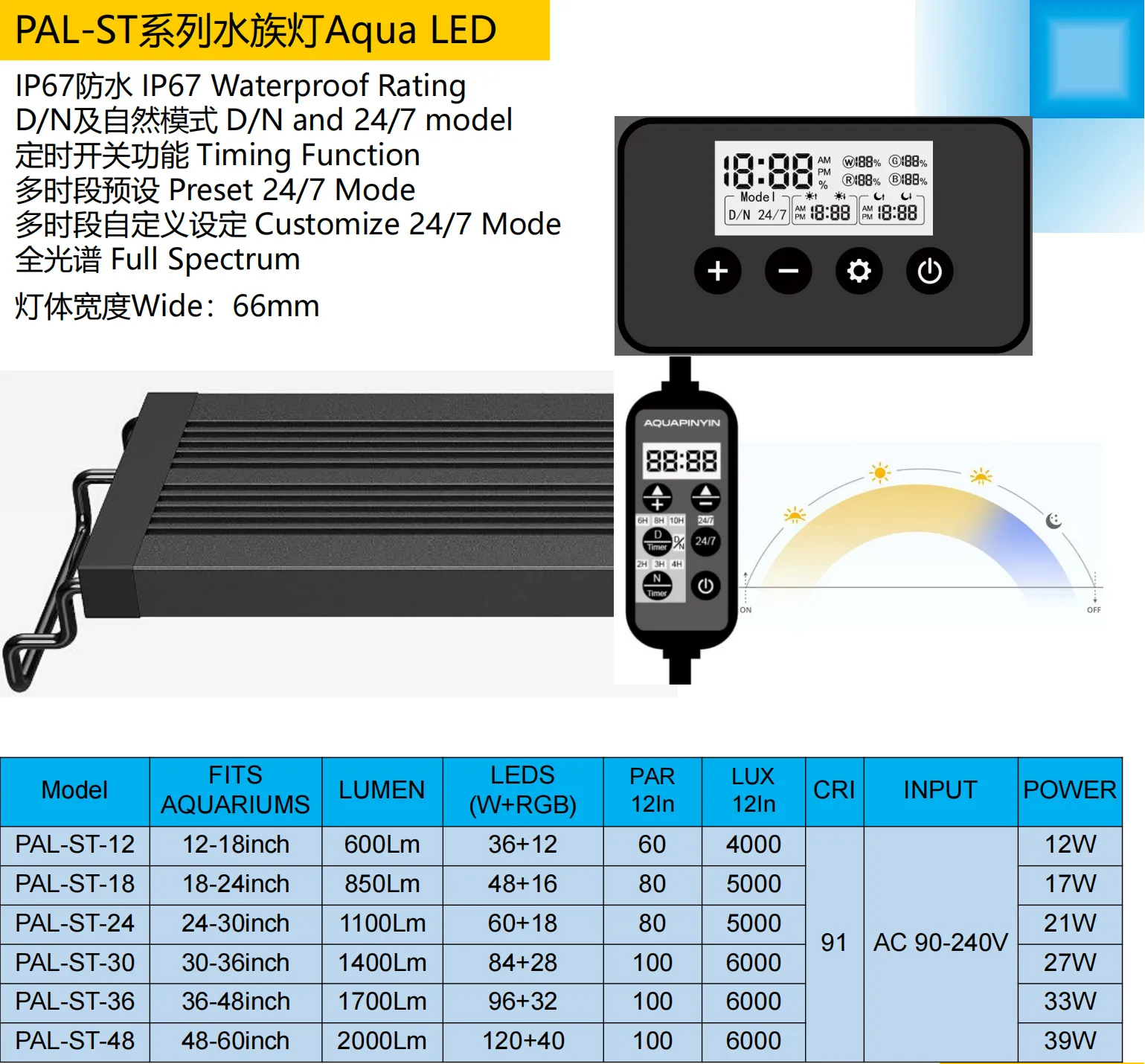
An Aquarium LED Light does not automatically cause algae. In most tanks, excessive algae growth is the result of several factors working together, particularly excessive light exposure, high nutrient availability, and inconsistent maintenance. A useful starting point is the photoperiod: many freshwater aquariums can operate effectively with roughly 6–10 hours of useful illumination per day, while the appropriate duration varies according to plant density, species, water chemistry, and tank depth. HiTauing lighting systems are designed with adjustable timing and intensity features that can help aquarists manage these variables rather than treating lighting as an isolated cause.
Understanding Why Algae Appears
Algae needs light, but light alone is rarely enough to explain a sudden outbreak. Nitrate, phosphate, dissolved organic matter, leftover food, and insufficient plant competition can provide the resources algae needs to spread. A tank receiving strong illumination for 12 hours while accumulating excess nutrients may therefore experience more algae than a similarly lit aquarium with balanced water parameters and healthy plant growth.
This distinction matters because reducing brightness without addressing nutrient buildup may only provide a temporary change. Regular water changes, appropriate feeding, filtration, substrate maintenance, and healthy plant growth all influence the ecological balance. Lighting should be adjusted as one part of that broader routine.
Photoperiod Can Change The Outcome
Duration deserves as much attention as intensity. A bright fixture running for a shorter, controlled period may be easier to manage than a moderately bright lamp operating continuously throughout the day. Extended illumination gives algae additional opportunities to use available nutrients, particularly in newly established aquariums where plant growth has not yet stabilized.
A practical approach is to begin with a moderate schedule and observe plant response, water clarity, and algae development over several weeks. Small adjustments are usually more informative than making dramatic changes from one day to the next.
Matching Light Intensity To The Aquarium
Different aquariums require different amounts of usable light. A low-tech freshwater tank with shade-tolerant plants does not necessarily need the same intensity as a densely planted aquarium containing demanding species. Water depth, plant placement, floating vegetation, and the distance between the fixture and the water surface also influence how much illumination reaches the plants.
Rather than judging a fixture only by its maximum brightness, aquarists should consider whether its output can be reduced when necessary. That flexibility becomes particularly valuable during the first few weeks of a new setup, when plants are adapting and algae can take advantage of unstable conditions.
Color Does Not Work In Isolation
A full-spectrum fixture can make fish, plants, and decorations appear more natural, but spectrum selection should still be considered alongside duration and intensity. Different wavelengths interact with aquatic plants in different ways, while excessive overall exposure can still contribute to algae growth regardless of the selected color profile.
The practical goal is not to find one “anti-algae” color setting. Instead, the lighting program should provide sufficient illumination for the intended plants while avoiding unnecessary exposure. Observation remains important because every aquarium develops its own balance.
Using Timers To Control Daily Exposure
An inconsistent lighting schedule can make an aquarium harder to manage. Switching the fixture on at different times every day may create an uneven rhythm, while forgetting to turn the lamp off can extend the photoperiod considerably. A timer establishes a repeatable cycle that reduces accidental overexposure.
The PAL-ST Series Aqua Aquarium LED Light provides timing on/off functions together with preset and customizable 24/7 modes. Its 66mm-wide light body and IP67 waterproof rating make it a practical example of how physical design and scheduling functions can be considered together when selecting equipment.
Simulated Day And Night Transitions
A gradual transition between brighter daytime illumination and softer evening lighting can create a more natural visual rhythm. The PAL-ST Series supports day/night operation and 24/7 natural modes, allowing the schedule to move beyond a simple binary on/off pattern.
Such features should not be confused with algae-control technology. Their value comes from giving aquarium owners more precise control over the daily lighting environment, which can make routine management easier and more predictable.
Keeping Nutrients Under Control
An aquarium with excess nutrients can develop algae even under carefully managed lighting. Overfeeding leaves organic material in the water, while insufficient filtration or irregular maintenance can allow compounds to accumulate. Fish stocking levels also matter because greater biological activity generally produces a larger nutrient load.
A sensible feeding routine should therefore accompany any lighting adjustment. If algae appears after increasing illumination, checking nitrate, phosphate, feeding frequency, and cleaning practices may reveal more than simply reducing the lamp’s brightness.
Plants And Algae Compete For Resources
Healthy aquatic plants can consume available nutrients and occupy space that algae might otherwise exploit. However, plants need appropriate light, carbon availability, nutrients, and stable conditions to grow well. Reducing illumination too aggressively can sometimes weaken plant development without addressing the original nutrient imbalance.
The better strategy is to balance plant requirements with the tank’s actual biological conditions. Lighting becomes one control point within the system rather than a single solution to every algae problem.
How Smart Lighting Makes Maintenance Easier
Modern fixtures can provide several useful controls, including scheduled operation, adjustable intensity, and preset lighting cycles. These functions allow the same aquarium to receive different levels of exposure during setup, plant acclimation, and established growth stages.
HiTauing offers lighting solutions built around programmable schedules and adjustable operating modes, giving users more control over how illumination fits into a daily aquarium routine The useful feature is not simply having more settings; it is being able to apply those settings according to the tank’s actual needs.
Adjustments Should Follow Observation
No lighting program should be treated as permanent. Plant growth, livestock changes, seasonal room conditions, and maintenance habits can alter the aquarium’s requirements. If algae begins appearing on glass or decorations, the first response can involve reviewing the photoperiod and intensity alongside water parameters rather than immediately replacing the fixture.
A gradual adjustment makes it easier to identify what changed. Keeping simple notes about lighting duration, maintenance dates, water tests, and visible plant growth can also reveal patterns that are difficult to notice from day-to-day observation.
Conclusion
LED lighting can contribute to algae growth when exposure is excessive, but blaming the fixture alone overlooks the wider aquarium ecosystem. A balanced approach considers photoperiod, brightness, spectrum, nutrient levels, plant health, feeding habits, filtration, and maintenance together. Programmable equipment makes these factors easier to manage because lighting can be adjusted instead of left at one fixed setting indefinitely. Customers with questions about product specifications, compatibility, or application guidance are welcome to Contact Us for a suitable lighting configuration.
With over 20 years of expertise in aquarium equipment, we deliver reliable, innovative solutions trusted by clients in 50+ countries. Our ISO9001 certified products, global certifications, and end-to-end support make us your ideal partner for aquatic success.
