

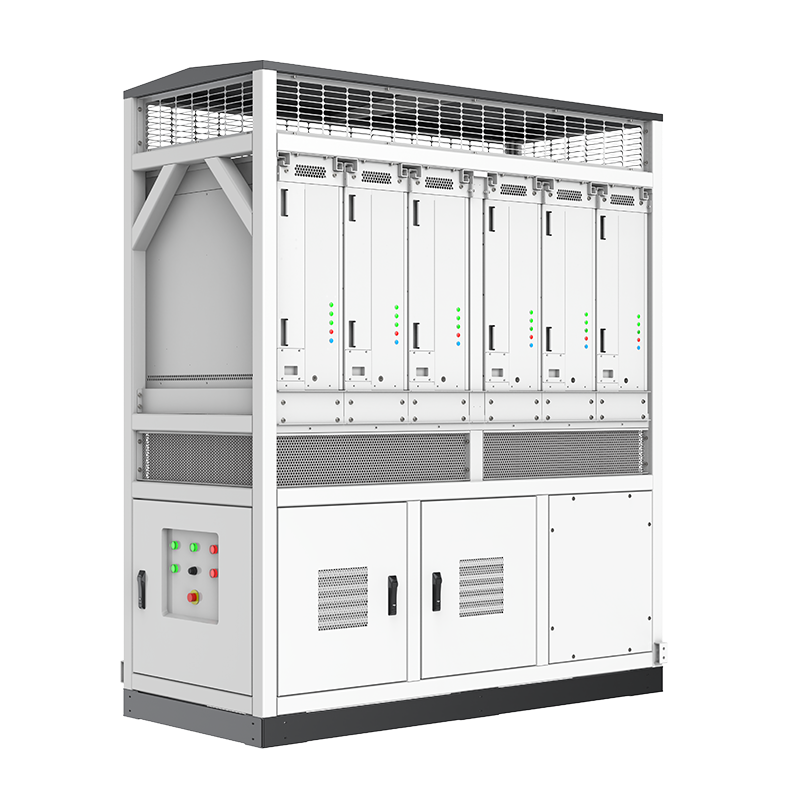
Scaling utility and commercial electrical infrastructure requires continuous innovation in power conversion efficiency and capital expenditure reduction. Deploying a 1500 Vdc air-cooled PCS with AC power ratings from 125 kW to 250kw inverter allows plant engineers to integrate high-voltage battery systems with different AC-side configurations.
Specializing in high-power conversion technologies, Enjoypowers manufactures scalable power conditioning solutions engineered for demanding grid-scale environments. Driven by proprietary in-house R&D capabilities, flexible hardware customization options, verified equipment stability, and comprehensive global service support, the organization assists engineering teams with custom system integration requirements. Technical consultants, project developers, and facility managers are invited to submit inquiries to receive detailed technical reviews and customized product proposals.
Thermal Management Strategies for Air-Cooled Power Conversion Modules
Operating high-capacity power semiconductors under continuous full-load conditions generates significant heat that must be dissipated to maintain component longevity. Utilizing forced-air cooling systems provides a reliable thermal regulation mechanism without adding complex liquid-cooling plumbing loops or risk of coolant leakage.
Optimized thermal routing prevents localized hot spots within the inverter chassis, protecting power modules during peak current transmission. Efficient airflow design maintains continuous power delivery across variable ambient temperature environments.
Voltage Architecture Adaptation for Modern Battery Integration
Integrating emerging battery chemistries into low-voltage distribution networks requires adaptable alternating-current conversion capabilities. Utilizing the 1500 Vdc air-cooled PCS series rated at 125 kW @ 400 Vac offers a single module capable of four distinct AC voltage configurations, optimized for Sodium-ion battery integration into 400 Vac LV systems.
Flexible AC voltage selection simplifies electrical matching across diverse regional grid standards and specialized battery chemistries. Adaptable conversion hardware lowers balance-of-plant engineering complexity for utility-scale developments.
Mitigating Line Losses in Large Scale Battery Storage Systems
High-voltage direct-current architectures lower operational current requirements for equivalent power transfer levels, reducing resistive losses ($I^2R$) across field cabling networks. Deploying high-density conversion hardware across large scale battery storage systems reduces total conductor cross-sectional area demands, lowering material expenses during facility construction.
Lower current densities across internal DC busbars generate less resistive thermal energy, decreasing facility auxiliary HVAC cooling loads. Optimized electrical layout maximizes net annual energy yield sent to the primary utility grid.
Dynamic Grid Interconnection and Multi-Voltage Configuration Compliance
Interconnecting energy storage assets with regional distribution networks requires full compliance with local power quality codes and dynamic grid support mandates. The 1500 Vdc PCS platform provides AC-side configurations of 400 Vac, 480 Vac, 690 Vac, and 800 Vac, with rated power outputs of 125 kW, 150 kW, 215 kW, and 250 kW respectively. The platform supports 50/60 Hz operation.
Active reactive power management cushions local voltage sags during sudden utility grid disturbances. Versatile voltage control options support seamless integration across both legacy sub-stations and modern industrial switchgear installations.
Scalable Modular Topologies for Commercial Energy Infrastructure
Expanding grid-scale energy storage capacity requires adaptable hardware form factors that allow incremental scaling without complete switchgear redesigns. Utilizing modular conversion units like the 1500 Vdc air-cooled PCS series enables plant engineers to build scalable power arrays that expand alongside prospective facility growth.
Standardized cabinet dimensions optimize physical footprint utilization inside outdoor switchgear yards or indoor equipment rooms. Modular conversion building blocks streamline capital allocation during phased site development.
Balancing Capital Expenditure and Operational Savings in High-Voltage Architectures
Financial assessments of grid-scale energy storage projects weigh initial hardware acquisition costs against multi-year operational efficiency gains. Utilizing high-voltage conversion technology across large scale battery storage systems lowers total Balance of System (BOS) costs through reduced cabling, smaller enclosure requirements, and simplified switchgear configurations.
Higher operational conversion efficiency reduces daily round-trip energy losses, accelerating project payback schedules for asset owners. Reduced internal semiconductor switching stress extends asset operational lifespans across multi-year duty cycles.
Digital System Telemetry and Control Interface Protocols
Modern grid-tied power conversion equipment relies on high-speed digital communication channels to exchange telemetry with central Supervisory Control and Data Acquisition (SCADA) platforms. Integrating standard fieldbus interfaces like Modbus TCP enables real-time monitoring of DC bus voltages, phase currents, and module operating temperatures.
Continuous data logging supports predictive maintenance workflows, identifying emerging electrical anomalies before service interruptions occur. Remote communication interfaces simplify multi-site fleet management for utility asset operators.
Selection Criteria for Utility-Scale Energy Conversion Deployments
Selecting appropriate conversion hardware requires evaluating DC input voltage limits, AC grid output classes, cooling mechanisms, and enclosure protection ratings. Selecting the appropriate PCS configuration requires evaluating DC voltage range, AC voltage and power requirements, cooling method, grid-control mode, and site operating conditions.
Thorough technical evaluation during early site planning phases prevents equipment mismatching and lowers long-term operational risk. Engineering teams prioritize validated product stability and comprehensive technical support when selecting project conversion hardware.
Evaluating Long-Term ROI in Advanced Power Management Systems
Investing in robust power conversion infrastructure enables energy storage projects to capture maximum revenue through frequency regulation, peak demand reduction, and energy arbitrage. Implementing advanced hardware across large scale battery storage systems ensures consistent round-trip efficiency, protecting asset value over decades of continuous operation.
Lower operational expenditures resulting from simplified thermal management and reduced cabling losses improve overall project economics. Reliable conversion hardware forms the foundation of modern, resilient energy networks.
Conclusion
Deploying high-voltage power conversion systems enables energy storage installations to achieve high operational efficiency, reduced cabling costs, and flexible grid compliance. Hardware topologies manufactured by Enjoypowers deliver resilient, industrial-grade power conditioning backed by internal R&D, flexible product customization options, verified equipment stability, and worldwide technical support. Engineering procurement managers, utility planners, and project developers are invited to contact technical specialists to obtain detailed product documentation and request customized installation proposals.
