

Peptide development rarely follows a straight path from laboratory synthesis to commercial manufacturing. As a peptide moves through process development, scale-up, and routine production, impurity control must evolve alongside changes in equipment, purification capacity, analytical methods, and quality requirements. A process that produces acceptable material at a small scale may require substantial refinement before it can deliver consistent quality at higher volumes.
For pharmaceutical developers and manufacturing partners, the objective is not simply to reduce impurities in a single batch. It is to understand where impurities originate, how their levels change during processing, and whether the manufacturing process can control them reproducibly. This makes impurity management a central consideration when evaluating manufacturing readiness and selecting technical partners.
Identifying Impurities During Early Peptide Development
Impurities can arise from incomplete coupling, incomplete deprotection, deletion sequences, side reactions, and chemical changes during processing or storage. Their profiles depend on the peptide sequence, protecting-group strategy, synthesis route, and purification conditions. Difficult sequences and modified peptides may introduce additional challenges, making early characterization essential to developing a reliable manufacturing process.
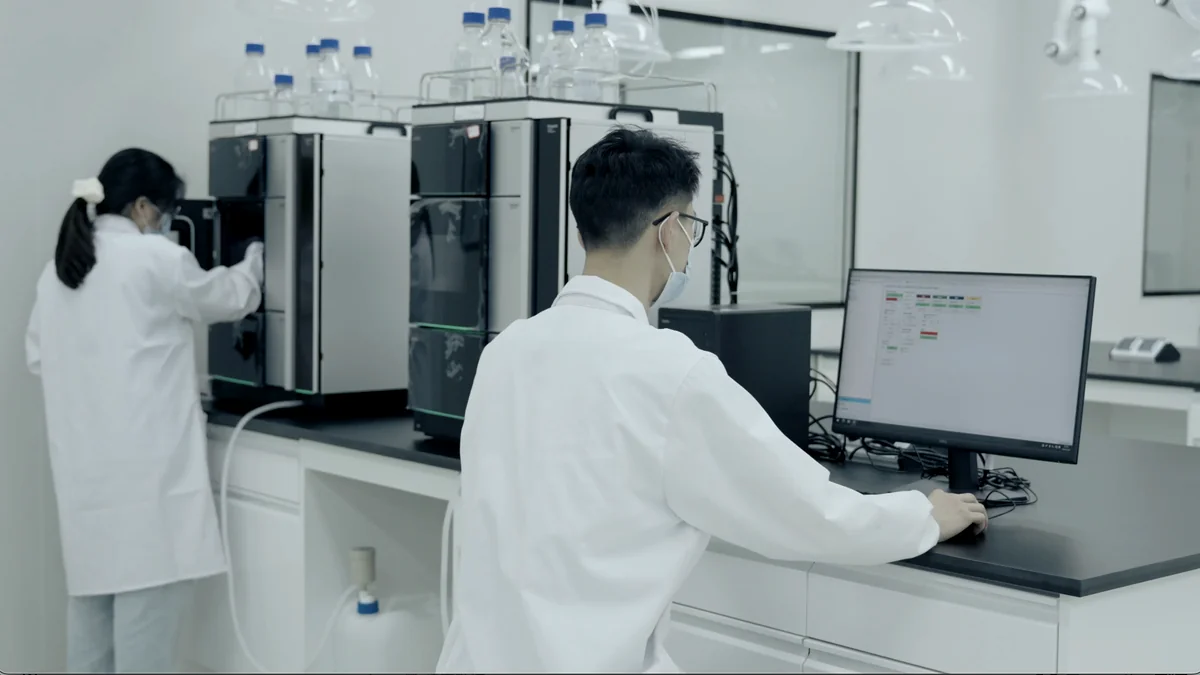
At this stage, peptide impurity control begins with understanding the chemistry rather than relying exclusively on a final purity result. Analytical techniques such as high-performance liquid chromatography (HPLC) and liquid chromatography–mass spectrometry (LC-MS) can help separate components and investigate their identities. Together, these methods provide evidence for identifying major impurities and determining which process parameters need improvement.
Early development should also establish a baseline impurity profile. Researchers can compare crude and purified material, investigate recurring by-products, and determine whether impurities originate during synthesis or subsequent handling. This information supports informed decisions about process changes before manufacturing conditions become more difficult and expensive to modify.
Improving the Process Before Scale-Up
Laboratory development offers flexibility, but a successful small-scale experiment does not automatically translate into a robust production process. Changes in mixing, reagent distribution, heat transfer, washing efficiency, and resin handling can affect reaction completion and impurity formation. Scale-up therefore requires more than increasing reagent quantities or using a larger synthesis vessel.
For custom peptide manufacturing companies, a key task is connecting impurity observations with controllable process parameters. Reaction monitoring, systematic experiments, and documented process adjustments can help identify operating ranges that deliver consistent results. Purification development is equally important because removing one impurity may also reduce product recovery or leave other related substances insufficiently separated.
A useful development strategy evaluates both purity and yield. Excessive purification can increase solvent consumption, processing time, and material losses, while insufficient separation can leave unwanted components in the final product. Establishing a practical balance early gives manufacturers a stronger foundation for subsequent scale-up decisions.
Why Larger Production Changes Impurity Management
As large scale peptide synthesis progresses, equipment geometry, batch size, solvent volumes, and purification loading can alter process performance. A chromatography method that works well with a small sample may exhibit different resolution or loading behavior when applied to a larger quantity of crude peptide. Filtration, precipitation, concentration, and drying may also require reassessment.
Consequently, peptide impurity control must consider the entire process rather than treating purification as an isolated step. Manufacturers need to examine whether impurities accumulate, become harder to remove, or vary between batches. Process comparisons should include relevant intermediate results, final purity, impurity profiles, recovery, and other quality attributes appropriate to the peptide.
The scale-up literature identifies large-scale purification, product isolation, and regulatory considerations as important challenges when moving peptide processes toward commercial production. These challenges make engineering assessment and analytical comparability essential parts of manufacturing development.
Strengthening Analytical Methods and Quality Specifications
Analytical methods must be suitable for the impurities that matter. HPLC can support routine purity assessment, while LC-MS can provide additional information about molecular mass and help investigate unexpected peaks. Depending on the product and manufacturing route, testing may also address residual solvents, water content, counterions, or microbiological attributes.
For pharmaceutical development, specifications should reflect scientific evidence, intended use, process knowledge, and applicable regulatory expectations. FDA guidance specifically addressing synthetic peptides discusses the evaluation and control of peptide-related impurities. Although ICH Q3A provides general principles for impurity reporting, identification, and qualification in chemically synthesized drug substances, its scope excludes peptides. Developers should therefore identify the guidance applicable to the specific peptide, product type, and regulatory pathway rather than applying general impurity thresholds without further justification.
Analytical methods should also be assessed for their intended purpose, including specificity, precision, and sensitivity where applicable. Consistent sample preparation, reference standards, system suitability, and documented data review help ensure that apparent batch differences represent meaningful changes rather than analytical variability.
Building Quality into Commercial Manufacturing
When large scale peptide synthesis enters routine production, impurity management becomes a continuing quality responsibility. Batch records, traceability, deviation investigations, and change control help manufacturers understand whether a process remains consistent over time. Trending analytical results can reveal gradual shifts in impurity levels before they develop into recurring production problems.
Selecting a large scale peptide synthesis service provider therefore requires more than comparing quoted purity levels or production capacity. Buyers should assess process-development capabilities, analytical support, purification expertise, quality systems, and the ability to explain how process changes are evaluated. These factors are particularly important for complex sequences, modified peptides, and projects with demanding impurity profiles.
UTIDE positions its services around peptide industrialization, offering process development, scale-up support, analytical and quality support, and manufacturing capabilities extending from laboratory development to kilogram-level production. Its stated quality approach includes batch traceability and testing support for purity, impurities, residual solvents, and microbial control. Such capabilities are relevant when a development project needs a more integrated route toward larger production volumes.
For custom peptide synthesis companies, the transition to commercial-oriented production also calls for clear communication between development scientists, analytical teams, manufacturing personnel, and customers. A well-defined impurity strategy helps align technical decisions with release criteria and project milestones.
Choosing a Scalable Impurity Control Strategy
A reliable large scale peptide synthesis service should support a documented progression from impurity identification to process optimization, scale-up assessment, and ongoing monitoring. Before transferring a project, buyers can ask how unexpected impurities are investigated, how purification methods are adapted to larger batches, and how analytical comparability is demonstrated.
The right approach to peptide impurity control depends on the molecule, intended application, synthesis route, and quality requirements. There is no universal purification method or single purity threshold that suits every peptide. Instead, development teams should establish scientifically justified controls that address product-specific risks while maintaining practical recovery and manufacturing efficiency.
Turning Development Knowledge into Manufacturing Consistency
Successful peptide industrialization depends on preserving product quality as process conditions and production volumes change. Early impurity characterization provides the foundation, process optimization improves robustness, and appropriate analytical methods help verify performance during scale-up and routine manufacturing.
For buyers comparing custom peptide synthesis companies, a partner’s ability to connect chemistry, purification, analytical testing, and quality management deserves close attention. A capable large scale peptide synthesis service should demonstrate how these elements work together, rather than relying on final purity figures alone.
As large scale peptide synthesis advances, the most effective strategy is to treat impurity management as a lifecycle activity. With integrated development expertise and a structured quality system, manufacturers such as UTIDE can support a more controlled transition from peptide research to larger-scale production.
