

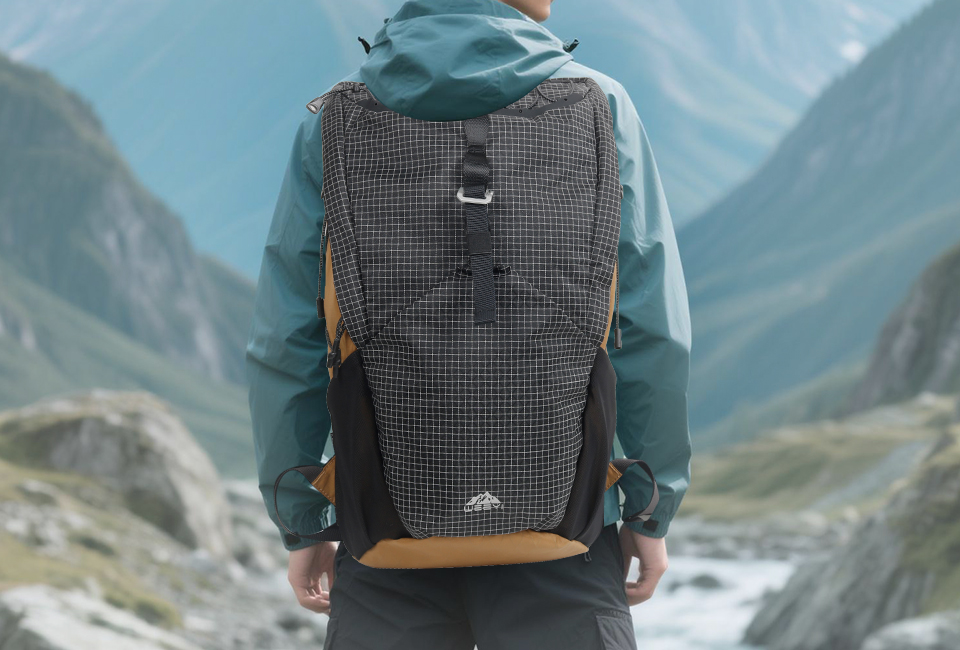
Sports bags face a demanding combination of weight, movement, friction, and repeated handling. A bag may carry shoes, clothing, towels, protective equipment, water bottles, and other heavy items while being lifted, dropped, squeezed into vehicles, or carried across training facilities. For business buyers, these conditions make structural durability a central product requirement. Stress-point reinforcement helps prevent localized damage around handles, shoulder straps, seams, zippers, and attachment areas. When combined with disciplined bag production, thoughtful material selection, and accurate prototyping, reinforcement can significantly improve the service life of sports bags.
Why Stress Points Are Vulnerable
A sports bag does not experience equal pressure across its entire structure. Certain areas repeatedly absorb concentrated forces. Handles transfer the weight of the entire bag into a relatively small attachment zone, while shoulder straps create continuous pulling forces on their connection points.
Seams can also become vulnerable when multiple fabric panels meet and loads are distributed unevenly. Zipper ends, corners, pocket attachments, and webbing connections may experience additional stress when users overfill the bag or repeatedly pull components in different directions.
For manufacturers, identifying these stress points during early design development is essential. Reinforcement added only after a product begins failing can be costly and may require structural changes that affect appearance, production efficiency, or specifications.
Reinforcement Begins With Structural Design
Effective reinforcement starts before sewing begins. Designers need to understand how the finished sports bag will be loaded and carried. A bag intended for gym equipment may require stronger base construction than a lightweight training bag, while a team sports bag may need reinforced handles because users frequently carry heavier loads.
Material thickness, seam positioning, webbing width, stitch density, and attachment methods should be evaluated together. Simply adding thicker fabric to every panel is rarely the most efficient solution. Strategic reinforcement places additional strength precisely where forces are concentrated while keeping the rest of the product manageable in weight and cost.
This design-led approach is particularly important for brands developing custom logo sports bags, because visual branding should not compromise structural performance.
Strengthening Handles and Strap Attachments
Handles and shoulder straps are among the most important reinforcement areas, because they directly carry the bag’s load. If attachment points are inadequately secured, the surrounding fabric can gradually stretch, fray, or tear under repeated use.
Common reinforcement strategies include extended webbing, multiple rows of stitching, reinforced patches, and carefully designed load-bearing seams. The reinforcement should distribute force across a larger section of fabric rather than concentrating it around a few stitches.
For business buyers, the exact solution should reflect the intended load capacity and carrying method. A sports bag designed for heavy equipment requires a different construction strategy from a lightweight promotional bag.
Protecting Seams, Corners, and Base Areas
The bottom and corners of a sports bag often experience considerable wear. Users place bags on floors, drag them short distances, push them under seats, and expose them to friction against other equipment. These repeated actions can weaken fabric and seams even when the main body remains intact.
Reinforced base panels can provide additional durability while helping the bag retain its shape. Corner construction can also be strengthened through additional fabric layers or carefully positioned seams.
For bag production, these details need to be considered alongside cutting and sewing processes. Reinforcement should be practical for repeated manufacturing, and should not introduce unnecessary complexity that increases production variation.
Prototyping Helps Reveal Hidden Weaknesses
A drawing may show where reinforcement should be placed, but physical prototypes reveal how a bag behaves under real conditions. Prototype testing can expose issues such as excessive tension around handles, awkward seam positioning, insufficient base support, or poor interaction between materials.
ChangRong describes an OEM/ODM development process that begins with demand docking and uses its professional design team to translate brand concepts, sketches, and functional requirements into preliminary designs. The process includes 3D modeling, prototype drawing, material matching, and the production of initial samples for brand review and revision.
This iterative approach gives buyers an opportunity to evaluate structural details before committing to larger-scale bag production.
Material Matching Supports Reinforcement
Reinforcement cannot be separated from material selection. Strong outer fabric may still perform poorly if it is paired with unsuitable webbing, thread, lining, or reinforcement patches.
Design teams should consider abrasion resistance, tensile strength, flexibility, thickness, and compatibility between materials. A rigid reinforcement layer, for example, may improve load resistance but could affect flexibility in another part of the bag.
Material matching is therefore an important part of OEM/ODM development. ChangRong’s design process incorporates material matching during prototype development, allowing brands to review how different materials contribute to both appearance and functional performance.
Quality Control Makes Reinforcement Consistent
A reinforcement method only creates value when it can be reproduced consistently. During production, stitch placement, seam allowance, webbing alignment, attachment strength, and finishing quality all influence durability.
business buyers should therefore evaluate a manufacturer’s quality-control procedures rather than judging a sample alone. Consistent inspection can help identify sewing defects, uneven reinforcement, material inconsistencies, or attachment problems before finished products reach customers.
This becomes especially important for custom logo sports bags, where brands need the finished product to combine visual consistency with dependable performance across larger production quantities.
Supporting Custom Sports Bag Development
Stress-point reinforcement is ultimately a combination of engineering, materials, prototyping, and manufacturing discipline. Handles, straps, seams, corners, zipper areas, and bag bases all need to be considered according to how the product will actually be used.
ChangRong brings more than 15 years of backpack-making experience to OEM/ODM development, combining design support with prototyping and production capabilities. Its development process allows brand requirements to move from initial concepts through 3D modeling, sample production, revision, and manufacturing.
For companies sourcing custom logo sports bags, this integrated approach can make it easier to develop products that balance branding, appearance, carrying comfort, and durability. Strong stress-point reinforcement may be a small detail in the overall design, but during demanding everyday use, it can make a major difference to product reliability and customer satisfaction.
