

Air bubbles in automated glue dispensing can be reduced through controlled material storage, appropriate mixing and degassing, careful cartridge loading, stable dispensing parameters, and regular inspection of the fluid path.
Well-configured dispensing valves help control fluid delivery, while careful process management reduces the risk of inconsistent deposits. Axxonauto develops precision fluid application technologies for manufacturing environments where repeatability and material control are essential.
How to Identify Where Air Enters the Fluid Path?
Air can become trapped long before adhesive reaches the dispensing nozzle. Opening containers carelessly, transferring material between vessels, or mixing components too aggressively may introduce bubbles into the fluid. Some adhesives may also release dissolved gases when pressure or temperature conditions change. This differs from entrained air introduced during mixing, transfer, or cartridge loading, so the appropriate prevention method depends on the source of the bubbles.
Material preparation should follow the supplier’s handling instructions. Vacuum degassing can help remove entrained air from compatible adhesives, but its effectiveness depends on viscosity, formulation, container geometry, and vacuum conditions. Excessive vacuum may cause foaming or volatile components to escape, so the procedure should be validated for the specific material rather than applied indiscriminately.
Storage and transfer practices deserve equal attention. Containers should remain properly sealed, and cartridges should be loaded without introducing unnecessary air pockets. For two-part adhesives, mixing ratios and mixing procedures must remain within the specified limits; inconsistent preparation can change flow behavior and create additional opportunities for bubbles to form.
| Air source | Typical cause | Control measure |
| Material preparation | Mixing or transfer introduces bubbles | Degassing, careful handling |
| Cartridge / feed | Improper loading or loose fittings | Check seals and loading procedure |
| Dispensing | Excessive pressure or unstable valve response | Adjust parameters, inspect nozzle |
How to Adjust Dispensing Parameters and Valve Behavior?
Pressure, flow rate, and valve timing determine how adhesive moves through the dispensing system. Excessive pressure may destabilize fluid delivery or cause splashing, while insufficient pressure can interrupt the material flow. The appropriate pressure range depends on the adhesive properties, dispensing mechanism, and fluid supply configuration. Parameter adjustments should be made systematically, changing one variable at a time and observing the resulting deposit.
The nozzle also influences bubble formation. An unsuitable nozzle diameter, a partially obstructed outlet, or poor alignment with the target can disturb the fluid stream. Regular inspection helps identify dried adhesive, wear, or contamination that may contribute to irregular deposits. Nozzle replacement should follow the material’s characteristics and the required deposit dimensions.
Different glue dispensing systems use different delivery mechanisms, so the appropriate control strategy depends on the equipment architecture. Time-pressure dispensing, positive-displacement pumps, and jetting valves respond differently to changes in viscosity and operating conditions. Stable material temperature, consistent cartridge loading, and suitable valve settings help maintain predictable flow without relying on pressure increases alone.
How to Match Non-Contact Dispensing to Application Needs?
Contact dispensing can introduce bubbles or defects if the nozzle touches the substrate, disturbs a previous deposit, or moves through material that has not settled. Non-contact jetting offers another approach: droplets are ejected onto the target without the nozzle contacting the surface. This can be useful for small deposits and densely populated electronic assemblies, although material compatibility and jetting stability must be verified.
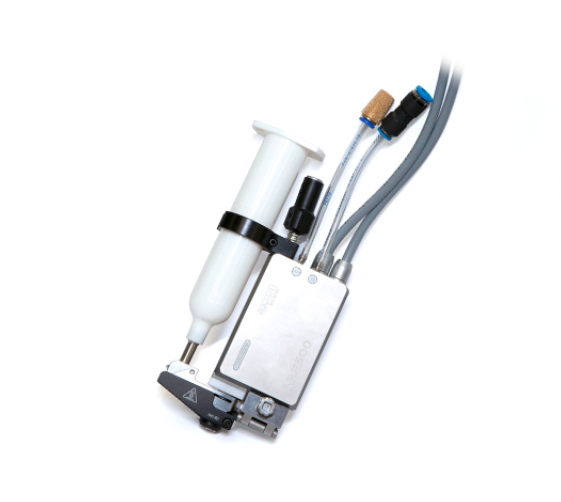
The APJ1500 Piezo Jetting Valve uses piezoelectric actuation for high-speed, non-contact material deposition. It is intended for applications across SMT, FPC, LED, PCB, semiconductor manufacturing, and other precision industries. Because the nozzle does not need to touch the component during deposition, the method can reduce contact-related disturbance; however, it cannot remove bubbles already present in the adhesive supply.
Deposit geometry and surface conditions remain important. A rapid jet may form an apparently clean deposit while a bubble remains inside the material, especially when the adhesive is opaque or the target is difficult to inspect. Process validation should consider the finished bond or coating, using suitable optical inspection, cross-section analysis, or other methods where internal voids could affect performance.
How to Build a Repeatable Bubble-Control Process?
Troubleshooting becomes more effective when operators record the conditions associated with each defect. Useful observations include adhesive batch, material age, storage history, temperature, pressure, valve settings, nozzle condition, and the location of visible bubbles. Comparing these records across production runs can help distinguish material-related issues from equipment or setup problems.
Inspection methods should reflect the risk posed by the application. Surface inspection may reveal visible bubbles and irregular deposits, while internal voids can require cross-sectioning, X-ray inspection, or other application-appropriate techniques. For critical assemblies, acceptance criteria should specify the allowable defect size, location, and frequency rather than treating every bubble as equally significant.
Conclusion
Bubble prevention depends on controlling the entire path from material preparation to final deposition. Degassing where appropriate, careful transfer, stable operating conditions, suitable valve selection, and targeted inspection each address a different source of risk.
Adhesive rheology, deposit size, cycle time, and defect-detection requirements deserve joint consideration when manufacturers assess dispensing valves. Axxonauto‘s precision dispensing technologies provide options for applications that demand controlled fluid delivery, while process-specific testing determines which configuration is suitable for a particular adhesive and assembly.
FAQs
What Is the Most Common Cause of Air Bubbles in Glue Dispensing?
Air may enter during mixing, transfer, cartridge loading, or dispensing. Some formulations can also release dissolved gas when pressure or temperature changes. Identifying the source is more effective than adjusting machine settings without diagnosis.
Can Vacuum Degassing Remove All Bubbles?
No. Vacuum treatment can reduce entrained air in compatible materials, but effectiveness depends on viscosity, formulation, and operating conditions. Some bubbles may remain or form later in the process.
Does Higher Dispensing Pressure Prevent Bubbles?
Not necessarily. Excessive pressure can destabilize flow, while inadequate pressure may interrupt delivery. The correct operating range depends on the adhesive, valve mechanism, nozzle, and required deposit.
Can Piezo Jetting Prevent Internal Adhesive Voids?
Piezo jetting provides non-contact deposition and can reduce defects associated with nozzle contact. It does not remove air already trapped in the material, so preparation and inspection remain necessary.
How Can Manufacturers Verify That Bubble Problems Have Improved?
Compare defect rates before and after controlled process changes, using consistent inspection criteria. Record material conditions, equipment settings, and deposit results to determine whether the improvement is repeatable across batches.
