

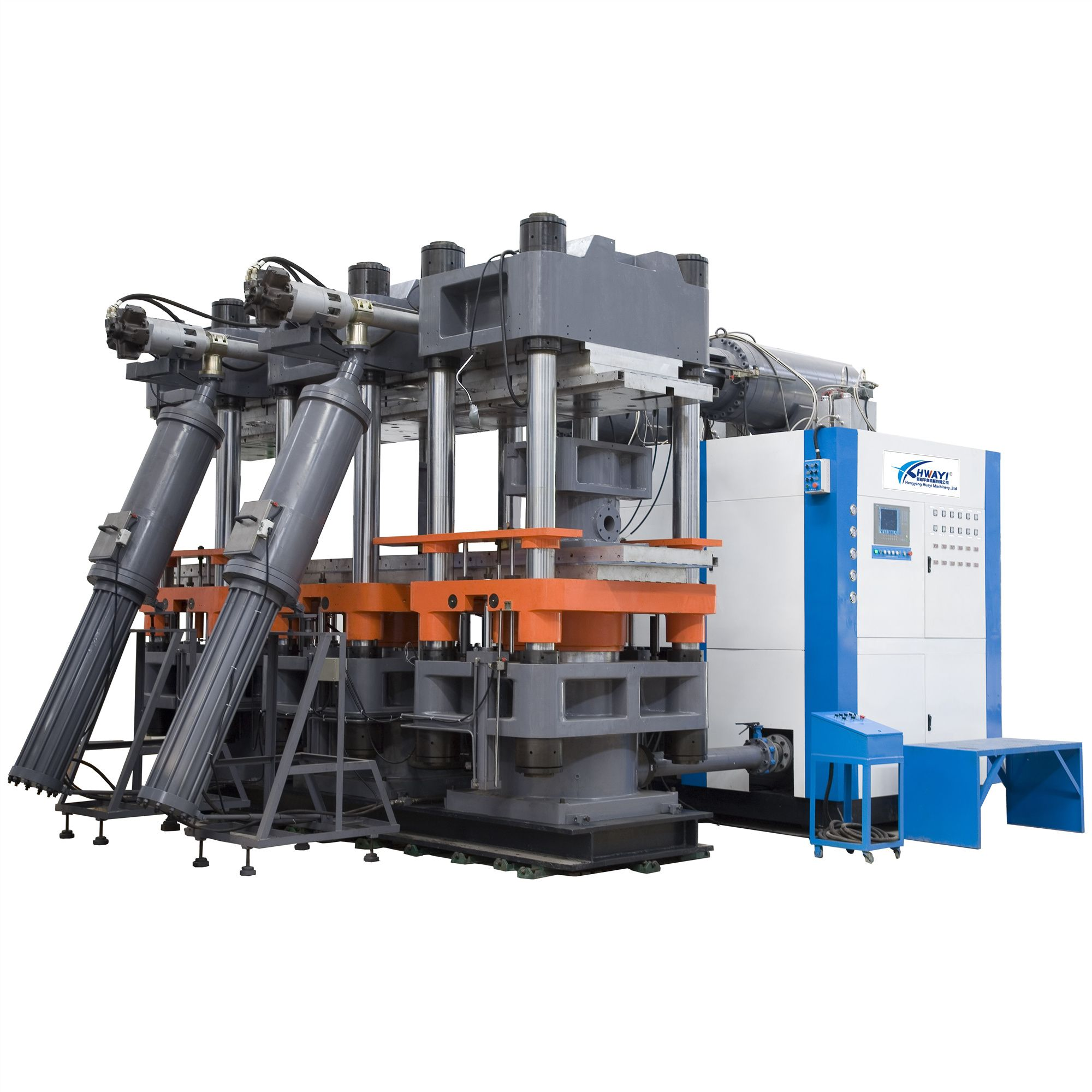
Across modern rubber manufacturing, production efficiency and process stability stand as core benchmarks that define competitiveness within industrial supply chains. Automatic rubber moulding machines have become indispensable for sustaining consistent output, minimizing manual reliance, and elevating overall manufacturing precision. Meanwhile, the rubber injection molding machine is widely adopted for producing high-specification products including insulators, bushings, and silicone rubber components. Specializing in industrial molding equipment, HWAYI develops sophisticated system solutions tailored to boost production efficiency and operational stability for large-scale manufacturing scenarios.
Automation and Continuous Production Improvement
Cutting manual workload across the full production cycle stands out as a major operational advantage of the automatic rubber moulding machine. Automated feeding, injection and clamping workflows enable non-stop production with little operator involvement, effectively reducing human error and maintaining steady output consistency.
When it comes to rubber injection molding machine applications, automation further standardizes cycle rhythm and operational stability. HWAYI’s HTV silicone insulator injection machines feature a vertical clamping plus horizontal injection structure, delivering generous injection capacity perfectly suited for intricate components such as composite insulators and hollow core bushings. These automated setups sustain uniform product quality while raising overall production capacity.
To further elevate performance, HWAYI has developed specialized feeding systems that automatically deliver soft HTV silicone into the plasticizing unit. This ensures a consistent material supply during prolonged continuous operation, directly boosting production efficiency for high-output industrial scenarios.
Precision Control and Material Optimization
Precise regulation of material processing is pivotal for unlocking the full efficiency potential of the automatic rubber moulding machine. Premium systems adopt proportional flow and pressure control to stabilize plasticizing performance, delivering consistent rubber flow and cutting material waste.
Design refinement remains equally vital to the performance of rubber injection molding machine equipment. HWAYI optimizes internal flow paths and customizes check valve structures to eliminate material dead zones, lower flow resistance, and suppress excessive heat buildup. This effectively avoids premature rubber aging and strengthens overall processing stability.
Efficiency gains are also realized through the adoption of a reverse-function screw design. It simplifies routine cleaning procedures and drastically reduces material residue waste during formula or material changeovers. With these upgrades, manufacturers can sustain higher productivity and shorten idle downtime between production batches.
System Integration and Operational Efficiency
Synergistic coordination among various subsystems directly defines the operational efficiency of the automatic rubber moulding machine. Seamless integrated control over plasticizing, injection and clamping processes streamlines production flow and minimizes unexpected cycle downtime. HWAYI’s rubber injection molding machine adopts a highly coordinated system design that merges high-precision mechanical structure with intelligent control logic. Such integrated design enables long-term stable operation and delivers consistent production quality across diversified product specifications.
Sustainable Efficiency in Industrial Production
Leveraging intelligent automation, precise parameter tuning and integrated system architecture, automated rubber molding units achieve remarkable production efficiency gains. Advanced rubber injection machinery further amplifies these advantages by stabilizing material processing consistency and substantially reducing operational waste.
Adhering to these core development concepts, HWAYI keeps innovating professional molding equipment to assist manufacturers in boosting overall productivity, strengthening process stability, and building more optimized and high-efficiency industrial rubber manufacturing workflows.
