

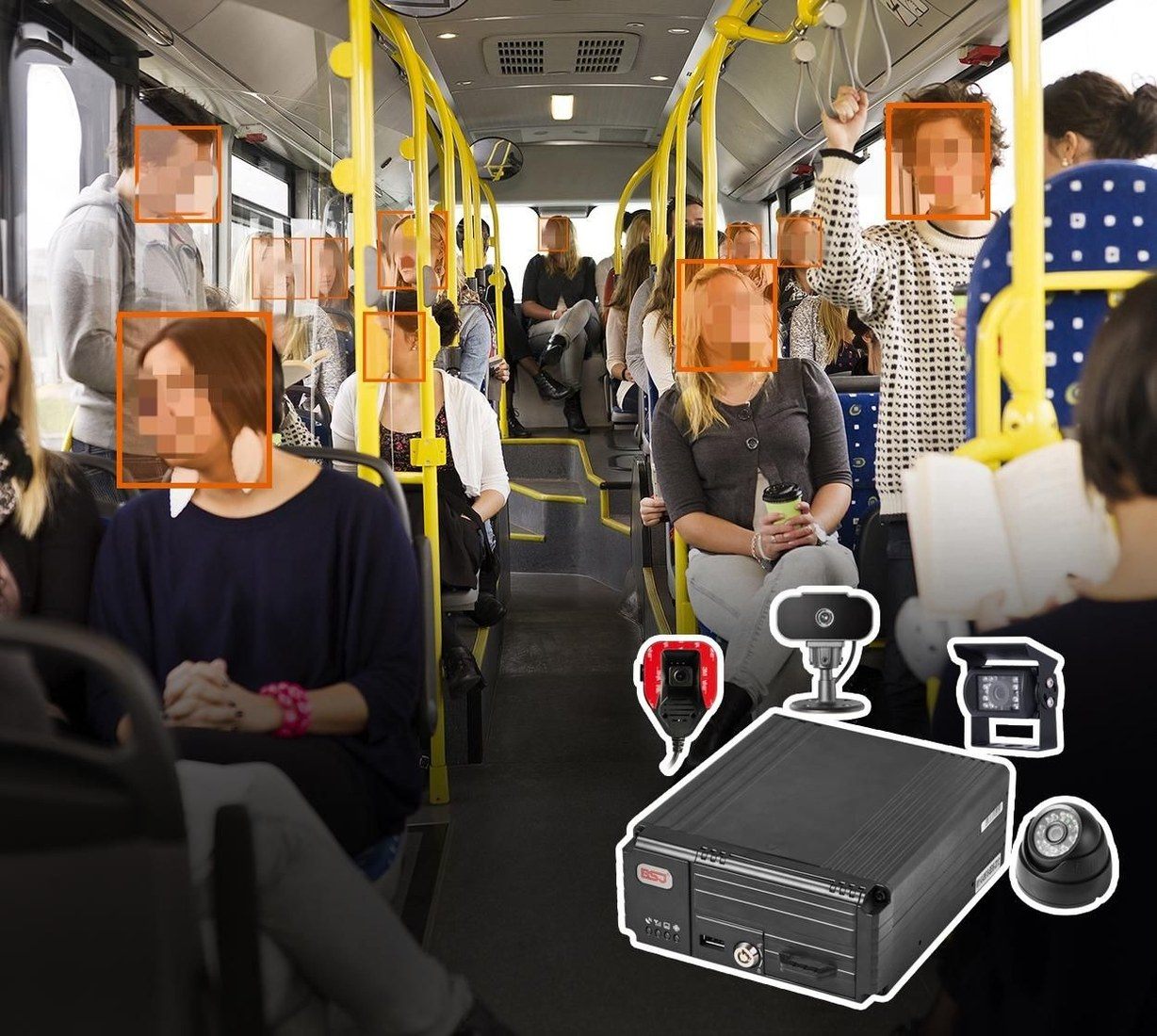
Public transport operators manage a moving service network rather than a collection of independent vehicles. Route adherence, passenger safety, driver behavior, service reliability, incident response, and vehicle availability all affect the daily operation. In that operating model, bus management software can organize these activities, but its decisions depend on accurate data coming from vehicles in real time.
AI video telematics adds context that location alone cannot provide. When public transport management combines GPS, onboard video, driver monitoring, alerts, and cloud reporting, supervisors can understand both where a bus is and what is happening around it. The technology should be deployed around service and safety workflows rather than as a collection of disconnected features.
Unify Vehicle Location with Schedule Control
Real-time positioning allows a control center to compare actual movement with planned routes and schedules. Late departures, long dwell times, route deviations, unauthorized stops, and bunching can be identified earlier when vehicle data is continuous. Dispatchers can then decide whether to adjust headways, communicate with drivers, or provide more accurate information to downstream systems.
Route history in bus management software needs to remain available alongside live position. Historical data helps planners identify recurring delay points, excessive layover, or routes where schedules no longer match road conditions. A single late trip may be an exception; repeated patterns across days or time periods can indicate a scheduling or infrastructure issue that needs broader action.
Hardware reliability is part of schedule visibility. GNSS performance, cellular coverage, power stability, device identity, and offline buffering all affect whether the control center sees a complete operating record. Buyers should test these conditions on dense urban routes, terminals, tunnels, and outer service areas before making a fleet-wide commitment.
Position data can also feed passenger-facing information when the transport authority or operator has the required systems. Estimated arrival displays, mobile applications, and control-room messages depend on stable vehicle identifiers and current route assignment. The telematics layer should therefore exchange data cleanly with scheduling and passenger-information systems rather than forcing staff to maintain duplicate route and vehicle records. Control centers can also compare actual trip patterns with planned service windows to identify recurring congestion, terminal delays, or schedule assumptions that no longer reflect operating conditions.
Use AI Video for Driver and Passenger Safety
Location tells supervisors where a bus is, while video can help explain an event. Driver Monitoring Systems can identify behaviors such as fatigue or distraction, and ADAS functions can warn about selected road risks. Cabin cameras can support incident review, passenger security, and investigation of complaints when their use is consistent with local privacy and retention rules.
BSJ Technology’s public-bus solution combines real-time tracking, intelligent scheduling, driver behavior monitoring, cabin monitoring, and data analytics. Relevant functions include DMS for fatigue and distraction monitoring, along with ADAS and other safety alerts for overspeeding, route deviations, unauthorized stops, and related events, together with HD cabin monitoring. For fleet operators, each alert should be connected to a defined control-room or safety-team response so that video telematics supports action rather than alert accumulation.
Evidence management needs clear policy. Who can view live or recorded video, how long footage is retained, when a clip is exported, and how passenger privacy is protected should be agreed before deployment. For a public operator, public transport management involves public-facing services, so data governance is part of operational design rather than a later legal add-on.
AI events need periodic validation because cab layout, lighting, camera position, uniforms, and driver behavior can influence detection performance. Safety teams should review samples of confirmed and rejected alerts, then adjust configuration through a controlled process. This human-in-the-loop approach keeps DMS and ADAS aligned with operational reality and avoids allowing an algorithmic alert to become an automatic disciplinary decision. Review teams should document false positives and missed events during a limited route evaluation, because those findings guide camera placement, threshold settings, and future driver-training priorities.
Connect Operational Data to Service Decisions
Fleet data becomes more valuable when different departments can use the same event record. Operations may review schedule adherence, safety teams may examine driver alerts, maintenance teams may track device health, and management may monitor service trends. A common data structure reduces disputes over which system holds the authoritative time, vehicle, or route information.
System integration is therefore central to procurement. BSJ Technology supports telematics hardware and software tools as well as third-party platform integration, which can suit transport operators or solution providers that already have scheduling, ticketing, passenger-information, or enterprise systems. The interface scope should be defined around required data fields and workflows rather than assuming that every bus function must live in one application.
The long-term objective is consistent service visibility. Reliable vehicle data enables dispatch control, AI video supports safety and incident context, and the fleet management platform can turn those inputs into operational insights and decisions. When implementation also includes installation standards, remote device management, technical support, and clear governance, public transport management can use video telematics to improve oversight without making the technology itself the center of the service.
Maintenance data from the telematics equipment itself should not be ignored. Missing camera channels, storage faults, offline devices, or outdated firmware can gradually reduce coverage even when the bus remains in service. Remote health monitoring and scheduled checks give the operator a way to maintain the monitoring system with the same discipline applied to other onboard equipment. Regular device-health reports can be combined with depot maintenance windows so faults are corrected before they create prolonged gaps in route, safety, or passenger-incident records.
