

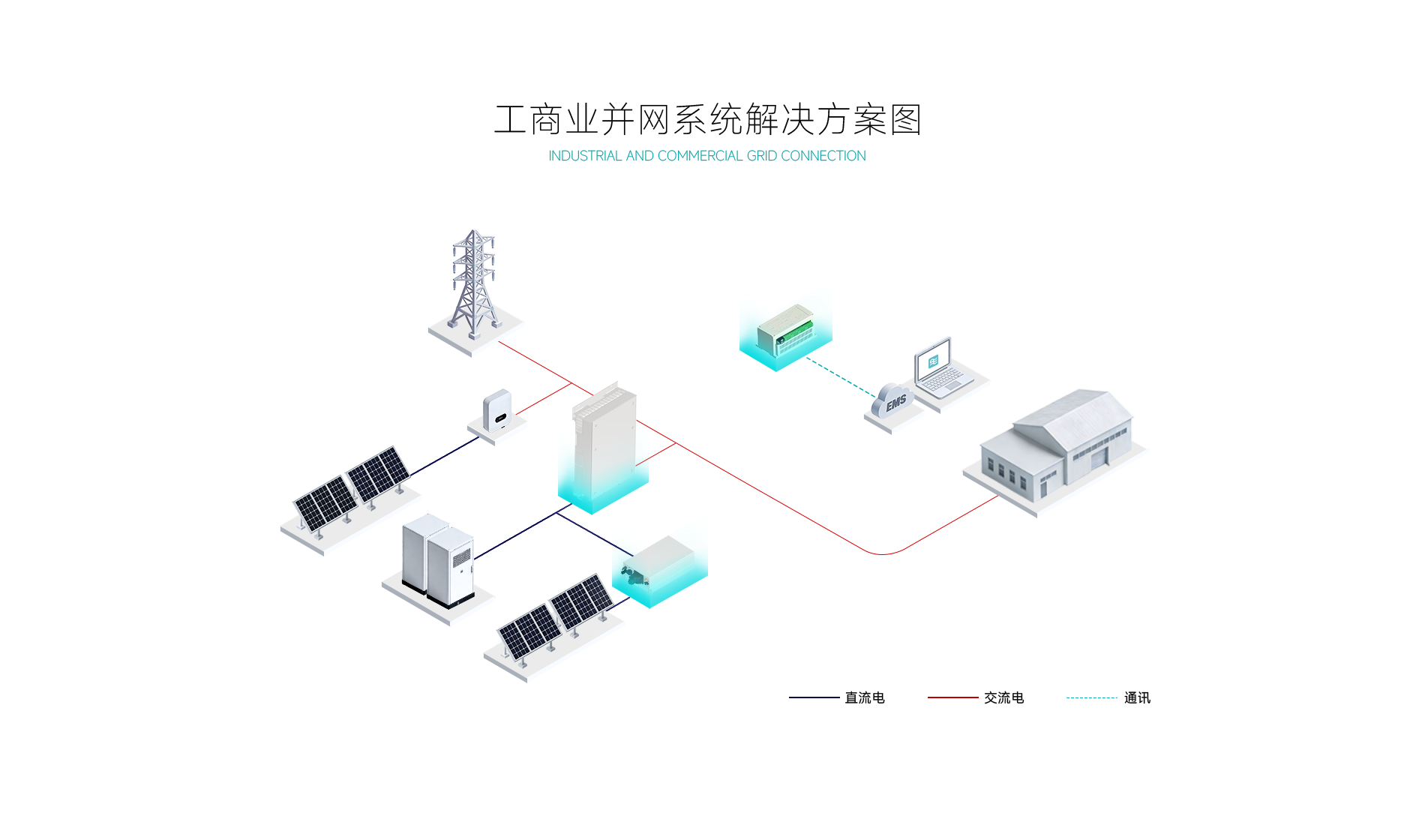
Commissioning a microgrid often involves repeated checks rather than one final setup step. Engineers need to confirm connected equipment, inspect operating status, adjust controller settings, load device configurations, and update software as the site moves from installation into normal operation.
Performing every routine task directly at separate power devices can make that work fragmented. A microgrid controller with web UI brings part of the monitoring and configuration process into a browser-based local interface, while the microgrid controller continues coordinating storage equipment and field devices behind that interface.
Browser Access Creates a Common Local Working Point
A Web interface changes how technicians reach the controller, not the fundamental control architecture. Instead of relying only on device-specific front panels or separate tools for every routine controller task, a browser can provide access to the local management layer.
Browser-based configuration is built into WidenEdge’s Hub through its mini Web server and Web UI. For a microgrid controller with web UI, this is particularly useful during commissioning because the controller already sits between multiple power-conversion units, batteries, and field interfaces.
Local browser access gives technicians one point from which controller settings and operating information can be handled without requiring every adjustment to begin at an individual MGC unit. As commissioning moves from wiring checks to operational tests, keeping controller-level tasks in one interface can make it easier to confirm that the installed configuration matches the intended system architecture.
Configuration Extends to BMS and Communication Interfaces
Storage projects often involve more than one communication path. SunSpec compatibility sits alongside Modbus TCP and Modbus RTU, while battery-side access is handled through configurable BMS protocol files that can serve multiple BMS groups. That means configuration work can include both general industrial communications and battery-specific protocol settings.
A microgrid controller has to keep those interfaces aligned with the equipment installed at the site. File-based BMS configuration provides a practical way to adapt the local controller to connected battery groups, while standard protocols support communication with other supervisory or field equipment.
Browser access adds a convenient management layer above those interfaces rather than replacing them. Multiple BMS groups can be connected, so the configuration task can extend beyond a single battery interface when the storage system contains more than one group.
Software Maintenance Becomes Part of the Local Workflow
Commissioning is not the end of controller maintenance. Software may need to be updated after deployment, particularly as the surrounding equipment configuration evolves. Software maintenance remains browser-accessible after deployment: the Hub’s built-in mini Web server provides the access path, and its software-upgrade function supports later updates.
That keeps software maintenance within the same local management environment used for controller configuration. The benefit is organizational as much as technical. A microgrid controller with web UI gives the maintenance process a consistent access point, so software work and routine configuration can remain centered on the local control layer instead of being scattered across separate devices.
That can be especially useful after equipment changes, when technicians need to revisit controller settings and software without rebuilding the entire commissioning workflow from the beginning.
Monitoring Is Most Useful When It Connects to Fast Local Control
A browser interface would have limited value if the controller behind it could not coordinate the actual power equipment. Behind the browser layer, coordination can scale to 32 parallel MGC units through 1MHz CAN while the specified grid-dispatch-to-power-output response remains below 10ms.
A separate dry-contact interface is rated for switching equipment up to 800A. These capabilities place the microgrid controller between human-facing management and time-sensitive field execution. Engineers can use the Web interface for local monitoring and configuration, while high-speed communications and switching interfaces carry out the real-time coordination required by the microgrid.
The two layers therefore serve different purposes but belong to the same controller architecture. Routine browser access can remain relatively slow and deliberate, while the underlying control path continues to operate on the millisecond time scale needed for dispatch.
Simpler Local Access Supports Deployment and Ongoing Service
A practical controller has to remain understandable after the installation team leaves. Browser-based access can reduce the number of separate interaction methods used for routine controller work, while protocol support and configurable BMS connections keep the local control layer compatible with multiple device types.
That structure is valuable during both initial setup and later service visits. It also keeps routine controller work centered on the same local layer when additional MGC units or BMS groups are brought into the project, rather than creating a separate operating method for each expansion step.
Routine operation becomes easier when browser access, protocol support, BMS configuration, and multi-unit control remain in one local layer. WidenEdge’s Hub keeps that browser-based management on the same local controller used for multi-unit coordination, BMS connectivity, switching interfaces, and software maintenance.
A microgrid controller with web UI therefore simplifies local monitoring and configuration by concentrating routine controller management at one accessible layer. The microgrid controller remains responsible for coordinating the underlying equipment, so easier access does not replace real-time control; it makes that control layer easier to commission, maintain, and operate over the life of the project.
SEO Title: How Web-Based Microgrid Controllers Simplify Local Monitoring and Configuration | WidenEdge
Meta Description: Read our latest insights on How Web-Based Microgrid Controllers Simplify Local Monitoring and Configuration. Explore browser access, interfaces, and maintenance.
